Table of Contents
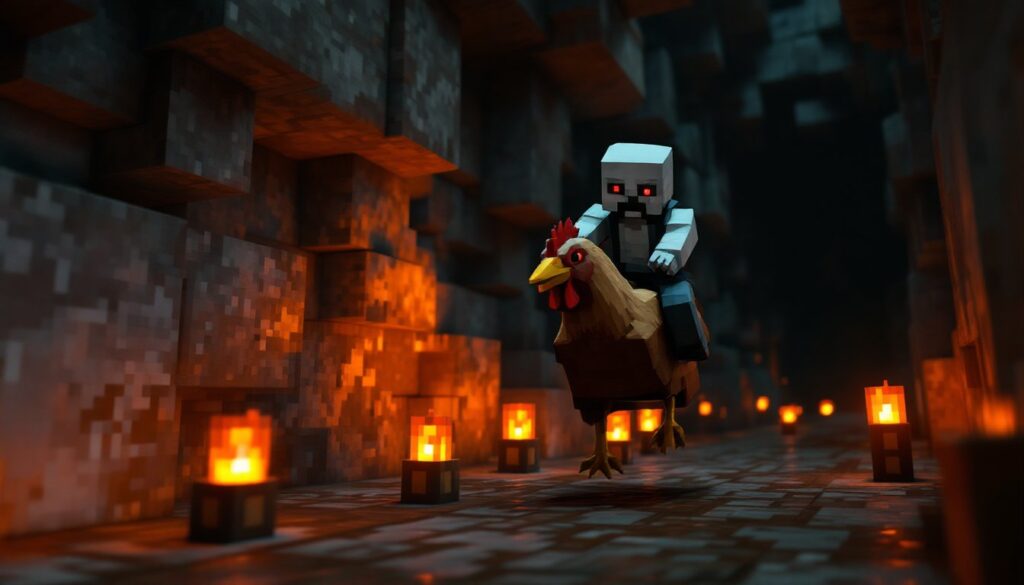
ToggleA chicken jockey is one of Minecraft’s rarest hostile mob combinations, and if you’ve encountered one, you know why they’re worth understanding. Imagine a baby zombie-type mob riding a chicken like some kind of tiny, terrifying rodeo, and you’ve got the picture. These hybrids move faster than standard zombies, take no fall damage, and can squeeze through tight spaces that would trap other mobs. Whether you’re playing survival mode and need to defend your base or designing a custom map, knowing how chicken jockeys spawn, behave, and attack can be the difference between a clean escape and a chaotic death. This guide breaks down everything you need to know about chicken jockeys in 2026, from spawn mechanics to combat strategies.
Key Takeaways
- Chicken jockeys are rare Minecraft hostile mob hybrids formed when baby zombie-type mobs mount chickens, resulting in faster movement, fall immunity, and the ability to navigate through tight 1-block-high gaps that trap regular zombies.
- Chicken jockeys spawn with a 0.4875% probability when baby zombies spawn near chickens in dark areas, roughly one jockey per 200 baby zombies in optimized conditions, making strategic placement near chicken farms the best way to encounter or farm them.
- Ranged combat with a bow or crossbow is the most effective strategy against chicken jockeys, as maintaining distance exploits their small hitbox while preventing their speed advantage from overwhelming you in melee range.
- Armed chicken jockeys spawning with weapons like golden swords or tridents are significantly more dangerous and require caution—back away from trident variants and use arrows to maintain control of the fight.
- You can intentionally spawn chicken jockeys using commands with /summon zombie ~ ~ ~ {IsBaby:1b,Passengers:[{id:”chicken”}]} or through natural spawning in dark rooms, making them valuable for adventure maps, mini-games, and mob farms.
- Fight chicken jockeys in open areas whenever possible, focus damage on the rider first, and use terrain to your advantage, as their only real asset is speed but they lack intelligence to adapt to well-planned defensive strategies.
What Is a Chicken Jockey and Why It Matters
A chicken jockey forms when a baby zombie-type mob, including baby zombie, baby zombified piglin, baby zombie villager, baby husk, or baby drowned, successfully mounts a chicken. The result is a rare, small-hitbox hostile mob with several dangerous characteristics.
The main threat comes from speed. Because the rider retains baby zombie movement bonuses, chicken jockeys move significantly faster than their adult counterparts. Add the chicken’s own mobility, and you’re facing a mob that can quickly close gaps your typical zombie would struggle with. The chicken component also grants another critical advantage: no fall damage. A chicken jockey will float down from heights that would obliterate a normal zombie, giving it massive positional flexibility.
Equally important is the chicken’s ability to navigate through tight spaces. A chicken can squeeze through 1-block-high gaps, meaning a chicken jockey can slip through defensive barriers you might build to stop regular zombies. If the chicken succeeds but the space above is solid, the rider may suffocate, but the chicken’s mere presence in the gap creates an exploit you need to anticipate. Also, armed variants can spawn with gear like golden swords or tridents, escalating the danger significantly.
Why does this matter? Because understanding these traits determines your defensive strategy. A standard zombie trap works differently against something this fast and mobile.
Where to Find Chicken Jockeys in Your Minecraft World
Chicken jockeys spawn under standard hostile mob conditions, but their appearance rate depends on two factors: baby zombie spawning and chicken availability.
Whenever a baby zombie-type mob spawns in darkness or valid hostile-spawn areas (caves, deep underground, nighttime overworld), it has a 5% chance to search for a nearby chicken within a 10×6×10 box and ride it. If no chicken exists in that area, the baby zombie has another 5% chance to spawn a new chicken beneath itself and mount it immediately.
In practice, this means spawn rates vary by location. In areas without chickens, each baby zombie spawn carries roughly a 0.25% chance of becoming a chicken jockey. With chickens present and roosting nearby, the probability jumps to approximately 0.4875%, nearly double. Zombified piglin jockeys can also spawn in the Nether under the same mechanics, though if they spawn on magma blocks, the chicken will die, leaving only a regular baby zombified piglin.
To increase your odds of encountering them (or farming them), position yourself near a chicken farm in a dark, hostile-spawn area. Cave systems with natural chicken presence work well. During night cycles in open terrain with chickens around, the combination of darkness and available mounts creates ideal conditions. Since these mobs despawn like regular zombies, 20+ blocks from the player, you won’t find them wandering far from spawn points if you leave an area and return.
How Chicken Jockeys Behave and Attack
Chicken jockeys inherit the aggression and combat behavior of their rider. A baby zombie jockey attacks players and villagers with the same hostility as any zombie. Baby zombified piglin jockeys remain neutral until provoked, then attack like their adult piglin counterparts. They’ll attempt to close distance using the chicken’s enhanced mobility.
Their movement pattern exploits the chicken’s physics. The rider can’t directly control the chicken’s direction, but the chicken pathfinds normally. This means the jockey can navigate terrain, climb hills, and, critically, fit through narrow passages. If you’ve built a 1-block-high barrier expecting it to hold mobs, a chicken jockey will pass right under it. The rider might suffocate if there’s a solid block directly above, but the chicken’s size advantage is real.
Once defeated, the chicken remains behind. Here’s the key: the chicken becomes passive after the rider dies and won’t attack or seek revenge. But, it typically won’t lay eggs and can despawn like any other mob if you stay away long enough. The chicken drops normal chicken loot (raw or cooked chicken and feathers based on fire damage), while the rider drops standard zombie drops plus any equipment it spawned with.
When facing a chicken jockey, assume it’s carrying a weapon unless you know otherwise. Some spawn with nothing: others spawn with a golden sword, enchanted iron sword, or even a trident. Always be prepared for an armed encounter.
Effective Strategies for Defeating Chicken Jockeys
Ranged combat is your strongest option. Equip a bow or crossbow and maintain distance. The chicken jockey’s small hitbox makes it harder to hit, but from range, you avoid getting overwhelmed by speed. A Piercing crossbow or Power bow works well for chip damage while you position yourself in open terrain where the mob can’t exploit tight spaces.
Fight in open areas whenever possible. Avoid caves with narrow corridors or your base with confined spaces, these are where chicken jockeys become lethal. In a wide, open arena, their only advantage is speed, and a well-placed arrow beats raw aggression every time.
When forced into melee, focus the rider first. Your sword deals more damage to the zombie-type than the chicken, and once the rider dies, you’re left with a passive chicken that poses zero threat. Use a shield if the jockey spawned with a melee weapon, this buys you time to land counterstrikes.
For armed variants (golden sword or trident), caution increases. Trident-wielding jockeys can deal knockback and ranged damage, making them significantly more dangerous. Back away if you see a trident and use arrows to finish the fight. If you’re fighting a golden sword variant, standard sword combat applies, though the speed advantage means you need to be extra sharp with your blocking.
Experience is your best teacher here. Once you’ve fought a few, the patterns become predictable. They’re fast but not smart, any mob, after all. Use terrain, weapons, and distance to your advantage.
Creating and Using Chicken Jockeys for Gameplay
If you want to intentionally create chicken jockeys, for adventure maps, mini-games, or mob farms, you have two approaches: natural spawning or commands.
Natural Spawning: Position a chicken farm in a dark room where baby zombies naturally spawn. The RNG works in your favor over time, but don’t expect instant results. The 0.4875% probability means you’re looking at roughly one chicken jockey per 200 baby zombies in optimized conditions. Patience and volume matter.
Commands (Java Edition): Use the summon command to spawn a chicken jockey directly. The basic syntax is:
/summon zombie ~ ~ ~ {IsBaby:1b,Passengers:[{id:"chicken"}]}
This spawns a baby zombie with a chicken as a passenger at your current location. Variants include replacing “zombie” with “zombified_piglin,” “husk,” “zombie_villager,” or “drowned.” You can also add equipment by including the ArmorItems or HandItems NBT tags, though syntax varies slightly across versions, always test commands on a creative world first.
Gameplay Uses:
- Adventure maps: Fast, small-hitbox enemies that challenge players differently than standard mobs.
- Mini-games: Racing or evasion challenges where players must survive waves of jockeys in confined spaces.
- Mob farms: Combine a chicken jockey farm with redstone to harvest both zombie and chicken drops. Music discs can drop if conditions for disc drops are met, adding incentive to build one.
For competitive or custom servers, jockeys add unpredictability. Their unique movement makes combat scenarios feel fresh. According to Dexerto, the Minecraft 1.21.94 update finally adds Lava Chicken song, highlighting ongoing developer interest in mob hybrids and rare spawns.
Conclusion
Chicken jockeys are rare, fast, and deceptively dangerous. Their combination of speed, fall immunity, and ability to slip through tight spaces makes them a genuine threat in survival mode and an exciting mechanic for custom maps. Whether you’re defending against them or building with them, mastering chicken jockeys adds depth to your Minecraft gameplay. Keep your bow loaded, fight in open spaces, and never underestimate how much a tiny chicken can complicate your day.