Console gaming lag can feel like a cruel joke played by the universe. Just when players are about to score that epic win or land a perfect headshot, the dreaded lag appears, turning their smooth gameplay into a frustrating slideshow. It’s like trying to run a marathon in slow motion while everyone else is sprinting ahead.
Understanding Console Gaming Lag
Console gaming lag refers to delays between player input and the game’s response, significantly impacting the gaming experience. Recognizing its causes and types helps players address these issues effectively.
What Is Console Gaming Lag?
Console gaming lag occurs when there’s a delay that affects gameplay, leading to unresponsive controls and frustrating experiences. Gamers might notice a sluggish reaction while executing commands, which can ruin competitive sessions. Lag doesn’t just stem from hardware; it can also arise from network issues or server performance. Bright visuals and high frame rates don’t always guarantee a smooth gameplay experience, as lag alters responsiveness in real-time action.
Types of Lag in Console Gaming
Various types of lag can impact console gaming, including input lag, network lag, and frame rate lag. Input lag happens when there’s a delay between pressing a button and the corresponding action on the screen. Network lag results from poor internet connections, causing delays in data transmission between the console and game servers. Frame rate lag occurs when the game struggles to maintain a steady frame rate, leading to choppy visuals. Each type of lag affects gameplay in different ways, emphasizing the importance of understanding and mitigating these issues for optimal performance.
Causes of Console Gaming Lag
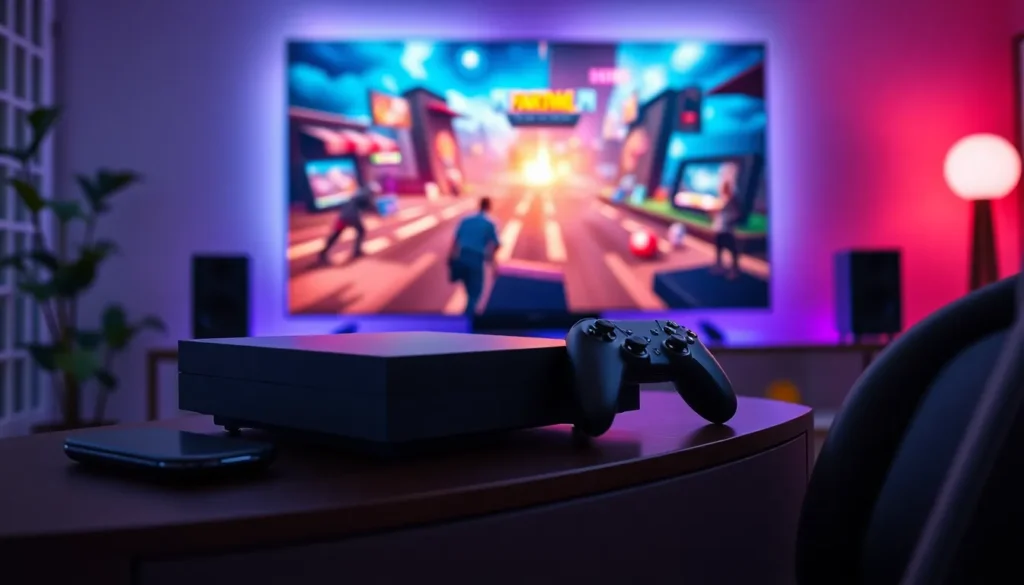
Console gaming lag can stem from several factors that significantly hinder gameplay. Understanding these causes helps address performance issues effectively.
Network Issues
Network issues often stand as a primary culprit in lagging experiences. High latency results from slow or unstable internet connections. Packet loss can occur when data transfers fail, leading to interruptions. Furthermore, heavy network traffic affects speed during peak usage times. Wi-Fi interference from walls or other electronic devices can degrade signal quality. Connecting directly via Ethernet generally provides more stability than relying solely on Wi-Fi.
Hardware Limitations
Hardware limitations can also contribute to lag. Aging consoles may struggle to keep up with newer games that demand more processing power. Inadequate memory leads to slower performance, especially with complex graphics. Additionally, overheating can cause consoles to throttle performance to manage temperature. Upgrading components, such as hard drives to solid-state drives, can enhance loading speeds. Ensuring sufficient ventilation is essential to maintain optimal performance during long gaming sessions.
Software Factors
Software factors play a crucial role in gaming lag. Background applications running on the console can consume valuable resources, leading to decreased performance. Outdated firmware may introduce bugs that hinder gameplay and responsiveness. Game optimizations are essential; poorly optimized titles frequently exhibit significant lag issues. Developers often release patches to resolve these performance problems, so keeping games updated is vital. Regularly clearing cache and data helps improve stability and speed across various gaming platforms.
Effects of Console Gaming Lag
Console gaming lag severely disrupts the gaming experience, leading to noticeable delays between a player’s actions and the game’s response. Lag holds the potential to diminish enjoyment and hinder performance.
Impact on Gameplay Experience
Gameplay suffers significantly due to console gaming lag. Players experience frustrations when actions do not translate instantly on-screen. Input lag leads to missed opportunities and poor timing. Games requiring precise coordination become challenging, impacting progression and enjoyment. Frame rate lag may cause stuttering visuals, breaking immersion. With network lag, delays in multiplayer scenarios amplify disadvantage, creating an uneven playing field. Overall, these hindrances compromise the thrill and satisfaction gamers seek during play.
Competitive Gaming Considerations
Competitive gamers often face serious consequences from console gaming lag. In high-stakes environments, even milliseconds matter. Input lag can affect response time, putting players at a disadvantage. Consistency remains crucial; a lagging player struggles against opponents maintaining smooth gameplay. Network lag can lead to lost connections, disrupting match flow and strategies. Every detail contributes to success in eSports and competitive tournaments, where optimized performance is non-negotiable. Gamers must prioritize low latency to maintain their edge and maximize potential in competitive scenarios.
Reducing Console Gaming Lag
Reducing console gaming lag enhances the overall experience. Gamers can take several steps to improve performance.
Tips for Gamers
Optimize the internet connection for better speeds. Reducing Wi-Fi interference by switching to a wired connection significantly lowers lag. Prioritize gaming devices by disconnecting other devices accessing the network during gameplay. Ensure the console is updated with the latest firmware for improved performance and bug fixes. Adjust the settings of games to lower graphical fidelity if frame rate lag occurs. Closing background applications frees up system resources, minimizing input and performance lag.
Upgrading Hardware
Upgrading hardware can effectively reduce lag. Consider investing in a solid-state drive (SSD) to improve load times and overall responsiveness. More RAM can help manage applications better, which reduces delays during gameplay. Network equipment also plays a critical role; upgrading to a quality gaming router helps decrease latency in online games. Using an external cooling system prevents overheating, maintaining consistent performance during intense gaming sessions. Lastly, choosing high-quality controllers with minimal input lag enhances responsiveness, critical for competitive play.
Console gaming lag can turn an exhilarating experience into a frustrating struggle. Understanding its causes is crucial for gamers who want to enhance their performance and enjoyment. By addressing hardware limitations and optimizing network connections, players can significantly reduce lag and improve their gameplay.
Investing in better equipment and maintaining console health can make a world of difference. With the right strategies in place, gamers can reclaim their competitive edge and enjoy smooth, responsive gaming sessions. Prioritizing these aspects not only enhances individual performance but also elevates the overall gaming experience.