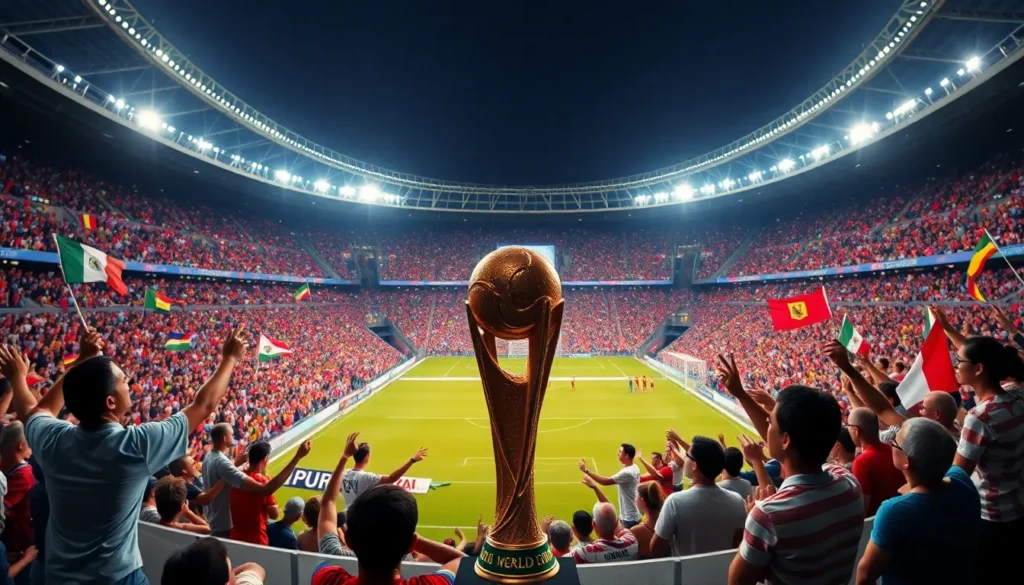
From the dusty fields of 1904 to the dazzling stadiums of today, FIFA’s history is a rollercoaster ride that’s packed with surprises, controversies, and unforgettable moments. Imagine a world where the beautiful game was just a twinkle in a referee’s eye. Fast forward to now, and it’s a global phenomenon that unites fans from every corner of the planet—often over a heated debate about the offside rule.
Overview of FIFA History
FIFA, established in 1904, aimed to unify various football associations under a single organization. Known formally as Fédération Internationale de Football Association, FIFA’s initial focus centered on standardizing rules and organizing international competitions. In 1930, FIFA hosted its first World Cup in Uruguay, marking a significant milestone in the sport’s history.
Throughout the years, FIFA has expanded its reach and influence, embracing numerous nations and enhancing the sport’s global appeal. The introduction of the Women’s World Cup in 1991 highlighted FIFA’s commitment to promoting women’s soccer, showcasing outstanding female athletes on an international stage. By the early 21st century, FIFA had grown to represent 211 member associations, establishing itself as a powerful authority in football governance.
Scandals and controversies have also marked FIFA’s trajectory. In recent years, allegations of corruption and bribery among officials raised questions about governance and transparency. Despite these challenges, FIFA continues to adapt, implementing reforms aimed at restoring integrity within the organization.
Players, fans, and officials often engage in discussions regarding FIFA’s regulations and decisions, such as changes to rules around offside and video assistant referees. These debates reflect the passion surrounding the game, underscoring FIFA’s critical role in shaping the future of soccer. Major tournaments, like the FIFA World Cup, draw millions of viewers, generating excitement and fostering unity among fans worldwide.
FIFA’s rich history encapsulates both the triumphs and trials that shaped the world of soccer, illustrating its importance in uniting diverse cultures through the love of the game.
Early Years of FIFA

FIFA’s early years laid the foundation for modern football. Established in 1904, the organization aimed to unify national football associations under a common framework.
Founding of FIFA
FIFA formed on May 21, 1904, in Paris. Representatives from seven countries attended: Belgium, France, the Netherlands, Denmark, Spain, Sweden, and Switzerland. The founding aimed to standardize the game’s rules and enhance international competition. It incorporated several national associations to create a robust network, fostering collaboration among nations. This new organization marked a crucial step in promoting football globally. FIFA’s expansion began as more countries sought membership, demonstrating a collective desire for cooperation in football.
First FIFA World Cup
The inaugural FIFA World Cup took place in 1930. Hosted by Uruguay, it featured 13 teams, including seven from South America, four from Europe, and two from North America. Uruguay, as the host nation, triumphed over Argentina in the final, securing a 4-2 victory. The event attracted global attention, highlighting the sport’s growing popularity. Fans flocked to stadiums, showcasing national pride and enthusiasm for football. This historic tournament set a precedent for future World Cups, featuring new teams and nations eager to compete on an international stage. The success of this tournament underscored FIFA’s vital role in promoting the sport worldwide.
Development of International Football
FIFA’s evolution included significant developments that transformed international football into a global phenomenon.
Expansion of Membership
FIFA’s membership grew rapidly after its establishment, reflecting the sport’s increasing popularity. By 1914, the organization included 21 member associations, showcasing its appeal across Europe. The post-World War II era saw unprecedented growth, with more nations recognizing football’s value. In 1950, the membership reached 85, as countries eager to participate in international governance joined the fold. The expansion continued into the late 20th and early 21st centuries. By 2023, FIFA represented 211 member associations, spanning every continent and uniting diverse nations under one umbrella. This remarkable increase not only boosted football’s prominence but also fostered unity among countries through shared passion for the game.
Major Tournaments Introduced
FIFA launched several key tournaments, significantly elevating international football’s profile. The inaugural FIFA World Cup in 1930 set the stage for global competition, drawing attention to the sport in unprecedented ways. Subsequent editions, held every four years, showcased emerging talents and national pride. The Women’s World Cup debuted in 1991, highlighting women’s contributions to the game and promoting gender equality in sports. Continental championships, such as the UEFA European Championship and Copa América, also gained importance, providing opportunities for nations to compete at higher levels. These tournaments created thrilling moments, solidifying football’s status as the world’s favorite sport and uniting fans across borders.
Evolution of FIFA Governance
FIFA governance has evolved significantly since its inception. Leadership changes have shaped the organization’s trajectory and decision-making processes.
Changes in Leadership
Leadership transformations at FIFA occurred through various presidential terms. The first president, Robert Guérin, led from 1904 to 1906. Subsequent presidents, like Jules Rimet, served from 1921 to 1954, establishing a foundation for international competition. Significant shifts happened with João Havelange, who presided from 1974 to 1998 and expanded FIFA’s scope and financial success. Sepp Blatter’s presidency from 1998 to 2015 further marked a controversial chapter, ultimately leading to his resignation amid corruption allegations. Currently, Gianni Infantino serves as president, having taken office in 2016. His focus on transparency and inclusivity aims to restore FIFA’s reputation.
Implementation of New Rules
New rules have constantly emerged to enhance gameplay and ensure fair competition. In 1925, FIFA changed the offside rule, allowing more attacking opportunities and increasing scoring. The introduction of yellow and red cards in 1970 standardized disciplinary actions and improved player conduct. Innovations continued with the adoption of goal-line technology in 2012, enhancing accuracy in key decisions. The implementation of video assistant referees in 2018 marked a significant milestone, addressing contentious plays and ensuring fairness. Recent adjustments include promoting video technology for better game integrity and developing protocols for player safety.
Significant Milestones in FIFA History
FIFA’s history is marked by several significant milestones that have shaped the global landscape of football.
Women’s World Cup Establishment
The Women’s World Cup began in 1991, representing a historic moment for women’s football on the global stage. This tournament aimed to promote female participation and raise awareness of women’s soccer. Hosted in China, the inaugural event featured 12 teams competing for the title. The United States emerged victorious, defeating Norway 2-1 in the final. Since then, the Women’s World Cup has grown significantly, expanding to 24 teams in 2015. The tournament’s popularity has led to increased support for women’s leagues worldwide and greater visibility for female athletes.
Introduction of VAR Technology
VAR technology made its official debut at the 2018 FIFA World Cup, marking a pivotal change in officiating standards. This system allows referees to review key decisions during matches using video replays. VAR aims to enhance the accuracy of officiating and ensure fair outcomes. While its implementation sparked varied reactions from fans and players alike, it aimed for greater transparency in decision-making. Key moments in matches can now benefit from thorough review processes, reducing errors that may influence game results. As technology continues to evolve, FIFA adapts rules to incorporate innovations that can streamline gameplay.
Recent Developments and Future Outlook
FIFA continues evolving to enhance the global football landscape. Recent advancements reflect its commitment to leveraging technology and promoting growth across various regions.
Impact of Technology on the Game
Advancements in technology significantly influence football. The introduction of VAR, video assistant referees, transformed match officiating. Accuracy improved as referees now review critical decisions using video replays. Innovations like goal-line technology also ensured correct goal assessments. Additionally, wearable performance trackers help players optimize fitness and strategy. These technologies enhance the viewer experience, making broadcasts more engaging. As these technologies mature, their integration into the game will likely increase, shaping future competitions.
FIFA’s Role in Global Football Growth
FIFA plays a crucial role in expanding football’s reach worldwide. The organization promotes grassroots programs that foster participation in underrepresented regions. Initiatives such as the FIFA Forward Programme provide financial support to member associations, enhancing infrastructure and development efforts. Major tournaments like the World Cup and Women’s World Cup showcase talent on a global stage, driving increased interest and investment in the sport. FIFA’s collaborations with clubs and leagues further unite disparate football communities, ensuring a more inclusive environment. By focusing on diversity and accessibility, FIFA aims to elevate the beautiful game for future generations.
FIFA’s journey from its inception in 1904 to a global sports leader reflects the evolving nature of football. The organization’s commitment to innovation and inclusivity has transformed the game and expanded its reach. With significant milestones like the Women’s World Cup and the introduction of VAR, FIFA continues to adapt to modern demands while promoting the sport worldwide. Challenges such as corruption scandals have prompted necessary reforms, ensuring a brighter future for the organization. As FIFA looks ahead, its focus on technology and grassroots initiatives will likely shape the next chapter in football history, uniting fans and players across the globe.