Table of Contents
ToggleMinecraft isn’t just a game, it’s a cultural phenomenon that’s spawned everything from YouTube empires to themed merchandise that rivals any major franchise. And when it comes to stepping into the blocky world IRL, Minecraft costumes have become the go-to choice for gamers, kids, and cosplayers who want to embody their favorite characters without breaking immersion. Whether you’re planning to show up as Steve at a convention, roll out a DIY Creeper for Halloween, or just want to dominate your next themed party, the right costume makes all the difference. This guide breaks down everything from where to buy ready-made gear to how to craft your own cardboard masterpiece, plus styling tips that’ll keep you comfortable while you’re living out your sandbox fantasies.
Key Takeaways
- Minecraft costumes remain popular because of their geometric simplicity—blocky character designs like Steve and Creeper are instantly recognizable and require minimal cosplay experience to execute well.
- You can buy ready-made Minecraft costumes from retailers like Amazon, Walmart, and Etsy, with official licensed versions offering better quality (typically $40–$80) than mass-market alternatives, though third-party options provide more variety and lower prices.
- DIY Minecraft costumes are affordable and customizable using basic materials like cardboard boxes, acrylic paint, and hot glue, with most character builds taking 3–5 hours to complete.
- Minecraft costume choices range from character-based outfits (Steve and Alex) to mob costumes (Creeper, Enderman, Warden) to block and item costumes, each suited for different events and age groups.
- Comfort and wearability require proper ventilation in cardboard heads, padding on contact points, and strategic mobility planning to ensure you can function for hours without discomfort.
- Group Minecraft costumes at gaming conventions, Halloween events, and birthday parties create memorable photo opportunities and strengthen fandom connection within the community.
Why Minecraft Costumes Remain Popular Among Gamers and Fans
Minecraft’s visual identity is deceptively simple: blocky, pixelated, instantly recognizable. That simplicity is exactly why costumes based on the game have remained a staple at cons, Halloween events, and birthday parties since the game exploded in popularity over a decade ago.
Unlike hyper-detailed armor sets from RPGs or intricate hero outfits that require foam-smithing skills, Minecraft costumes work because of their geometric clarity. A square head, some pixel-perfect textures, and you’re done. Kids love them because they’re comfortable and easy to move in. Adults appreciate that you can pull off a convincing Steve or Creeper without spending hundreds of dollars or needing advanced cosplay experience.
The game’s ongoing updates, most recently the Tricky Trials update in mid-2024 and continued biome expansions, keep Minecraft fresh in the cultural conversation. New mobs like the Breeze and Armadillo give cosplayers more options, and the game’s presence across PC, PlayStation, Xbox, Switch, and mobile means the fanbase is massive and multi-generational.
Add in the explosion of Minecraft content on platforms like YouTube and Twitch, where creators regularly do IRL challenges and themed events, and you’ve got a recipe for sustained costume demand. Whether it’s a group cosplay at PAX, a school event, or just a nostalgic trip down memory lane, Minecraft costumes hit that sweet spot of accessibility, recognizability, and low barrier to entry.
Types of Minecraft Costumes to Consider
Character-Based Costumes
The default duo, Steve and Alex, remain the most popular character picks. Steve’s blocky blue shirt and jeans combo is iconic, while Alex’s orange hair and green pants offer a slightly different vibe. Both are easy to source or DIY, and they work for any age group.
Beyond the defaults, you’ve got skins. Minecraft’s skin system means there are thousands of custom character designs, from warrior skins to meme-tier creations. Some costume makers offer generic “player character” designs that let you add custom details, though most people stick with Steve or Alex for instant recognition.
Mob and Creature Costumes
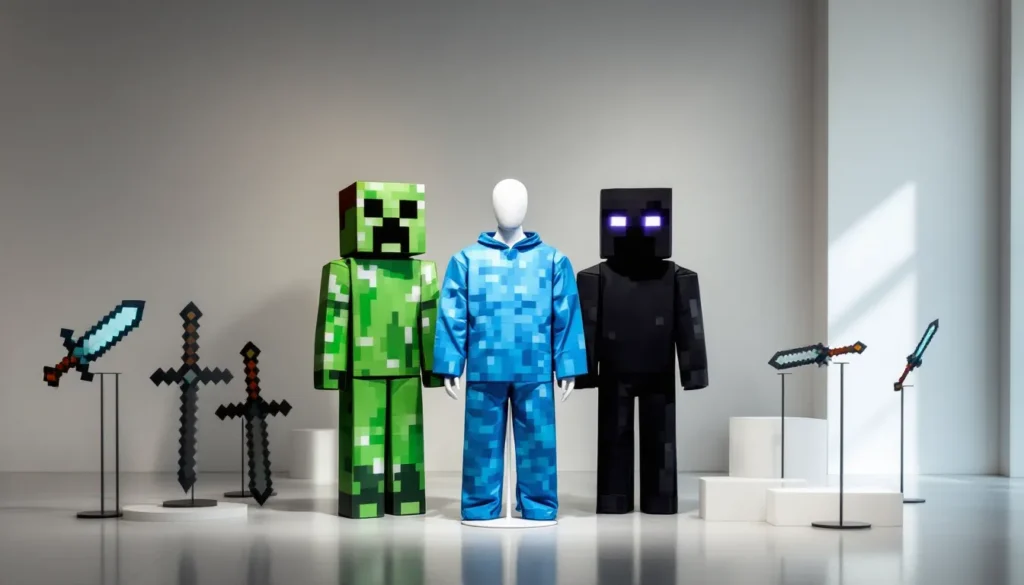
This is where things get fun. Creeper costumes are a Halloween staple, green, black pixels, and that haunting face make them unmistakable. They’re also forgiving to build at home with cardboard and paint.
Enderman costumes bring the creep factor with their tall, lanky silhouette and purple eyes. These usually involve black bodysuits or robes with extended arms, plus a block prop to carry around.
Other mob options include Zombie, Skeleton, and the newer Warden from the Deep Dark biome (added in the Wild Update, version 1.19). The Warden’s sculk-covered design is visually striking but trickier to execute without some crafting chops.
Don’t sleep on passive mobs either. Pig, Cow, and Chicken costumes are adorable for younger kids and make for great group themes.
Block and Item Costumes
For those who want to go full meta, block costumes let you become a literal piece of the Minecraft world. Diamond Block, TNT, and Grass Block outfits are surprisingly popular, especially for younger kids who want something goofy and unique.
Item costumes, like dressing as a Diamond Sword or Pickaxe, are rarer but can be hilarious conversation starters at events. These tend to be homemade since mass-market options are limited.
Where to Buy High-Quality Minecraft Costumes
Online Retailers and Specialty Stores
If you’re looking to buy rather than build, you’ve got plenty of options. Amazon and Walmart carry a wide range of Minecraft costumes, especially during the Halloween season. Expect to find everything from basic Steve and Creeper outfits to full mob suits with masks and accessories.
Specialty costume retailers like Spirit Halloween and Party City stock Minecraft gear seasonally, with in-store options that let you check fit and quality before buying. Etsy is a goldmine for custom and handmade costumes, especially if you’re after a specific skin design or want higher-quality materials than mass-market offerings.
For international buyers or those hunting rare designs, eBay can surface older or region-specific releases, though quality can be hit-or-miss.
Official Minecraft Merchandise vs. Third-Party Options
Official Mojang/Microsoft-licensed costumes tend to offer better color accuracy and build quality, with proper licensing marks and packaging. These are usually priced higher, expect to pay $40-$80 for a full outfit, but the materials are generally more durable and the prints sharper.
Third-party costumes flood the market, especially on Amazon and budget retailers. These can be solid value if you’re only wearing the costume once or twice, but watch out for thin fabrics, misaligned prints, and sizing inconsistencies. Read reviews carefully and check return policies.
One advantage of third-party options is variety. Smaller manufacturers often produce niche mob costumes or updated designs based on recent game updates faster than official licensors can move.
DIY Minecraft Costumes: Crafting Your Own Blocky Creation
Materials and Tools You’ll Need
Building your own Minecraft costume is cheaper and more customizable than buying, and it’s honestly not that hard. Here’s the core toolkit:
- Cardboard boxes (large enough for a head, plus smaller ones for accessories)
- Craft paint (acrylics work best, green, black, brown, and blue are your MVPs)
- Box cutter or craft knife
- Hot glue gun and sticks
- Ruler and pencil for measuring and marking
- Printable Minecraft textures (grab these from fan sites or generate your own)
- Clear packing tape for reinforcement
Optional but useful: foam sheets for lightweight props, elastic straps for head attachments, and LED strips if you want to add glow effects to an Enderman or Warden costume.
Step-by-Step Guide to Building a Steve or Alex Costume
-
Head construction: Find a cardboard box that fits over your head comfortably. Measure and cut out a square viewing window at eye level. Print or hand-paint Steve’s or Alex’s face onto paper, then glue it to the front of the box. Paint the remaining sides in the appropriate skin tone (tan/beige for Steve, lighter peachy tone for Alex).
-
Body outfit: You can cheat this part. For Steve, wear a light blue t-shirt and blue jeans. For Alex, grab an orange or green shirt and dark pants. If you want to go full DIY, paint or print Minecraft’s pixel textures onto cardboard “vests” that slip over your torso.
-
Arms and hands: Cut smaller cardboard rectangles to create blocky arm extensions. Attach them loosely to your wrists with elastic so you can still move your hands. Paint them to match the character’s shirt sleeves.
-
Accessories: Build a cardboard Diamond Sword or Pickaxe by cutting the tool shape from cardboard, doubling it up for stiffness, and painting it in the iconic blue-teal gradient.
Total build time: 3-5 hours depending on detail level.
Creating Cardboard Creeper and Enderman Costumes
Creeper: Use a large cardboard box for the head, painted lime green with the black pixel face stenciled on. For the body, either build a boxy cardboard torso or wear green clothing and attach cardboard “texture panels” to the front and back. The key is nailing that unsettling face, print a template if your freehand skills are shaky.
Enderman: This one’s trickier. Start with all-black clothing (hoodie and pants work great). Build a narrow cardboard head with purple eyes cut out and backlit with purple LED strips or glow sticks. Extend the arms with long cardboard tubes painted black, and carry a small painted block (grass, dirt, etc.) as a prop. The height illusion is tough to pull off without stilts, but the silhouette and glowing eyes sell it.
Minecraft Costume Ideas for Different Occasions
Halloween and Trick-or-Treating
Minecraft costumes are Halloween gold. They’re warm enough for cooler October nights, comfortable for walking neighborhood routes, and instantly recognizable so kids don’t have to explain who they’re supposed to be.
Creeper costumes are the classic pick, spooky enough to fit the vibe, but not scary for younger trick-or-treaters. Steve and Alex work great for siblings or friend groups. And if you’re handing out candy, dressing as a Villager with a cardboard “Hmm” speech bubble is a solid meta joke.
For maximum candy haul efficiency, avoid costumes with bulky heads that limit vision. A half-mask or face paint version of your chosen character keeps peripheral vision clear for dodging curbs and spotting fun-size Snickers.
Gaming Conventions and Esports Events
At events like PAX, TwitchCon, or local gaming expos, Minecraft costumes hit differently. You’re surrounded by people who get the references, so you can go deep.
Consider lesser-known mobs like the Allay, Warden, or Sniffer (added in version 1.20). These show you’re up on recent updates and stand out from the sea of Steves. Group cosplays, like a full Nether crew with Piglins, Blazes, and Ghasts, make for killer photo ops.
Many gaming conventions are covered by outlets like IGN, so if your costume’s fire, you might end up in a cosplay showcase gallery.
Themed Birthday Parties and Group Cosplay
Minecraft-themed birthday parties are a staple for the 6-12 age bracket, and costumes make the event. Coordinate a group where each kid picks a different mob or character, Zombie, Skeleton, Spider, Pig, etc., and you’ve got an instant photo-ready crew.
For adult gaming groups, ironic Minecraft cosplay at LAN parties or themed hangouts never gets old. Bonus points if you sync costumes with an in-game build competition or survival challenge.
Sizing and Fit Considerations for All Ages
Kids’ Minecraft Costumes
Kids’ sizes usually run from toddler (2T-4T) up through youth large (10-12). Most minecraft costume kids offerings are designed with safety and comfort in mind, softer fabrics, Velcro closures instead of zippers, and heads with wider eye holes.
When buying for kids, always size up if you’re on the fence. Children grow fast, and a slightly loose costume is way more comfortable for active play than one that’s snug. Check sleeve and pant lengths carefully: many cheaper costumes skimp on inseam, leaving ankles exposed.
For DIY builds, measure your child’s head circumference before cutting the cardboard box. You want enough clearance that the costume doesn’t squeeze or wobble, but not so loose it slips down over their eyes mid-trick-or-treat.
Adult Minecraft Costumes
Adult sizing for Minecraft costumes typically ranges from small through XXL, though fit can be wildly inconsistent between brands. Adult minecraft costume designs often lean toward unisex cuts, which means broader shoulders and looser torsos.
If you’re tall (over 6’2″), expect standard costumes to run short in the arms and legs. DIY becomes almost mandatory unless you’re willing to hunt specialty retailers. On the flip side, if you’re under 5’6″, youth XL sizes can sometimes work and save you money.
For adults doing conventions or long wear times, prioritize breathability. Cardboard heads get stuffy fast, so cut extra ventilation holes hidden behind the design or add small battery-powered fans inside the headpiece.
Accessorizing Your Minecraft Costume
Weapons, Tools, and Props
No Minecraft costume is complete without a tool or weapon. Diamond Sword, Pickaxe, Axe, and Shovel are the iconic picks. You can buy foam or inflatable versions online, but DIY cardboard builds are cheaper and often look better if you nail the paint job.
For a realistic pixelated effect, use painter’s tape to mask off individual “blocks” of color on your weapon, then spray paint each section. Seal with a clear coat to prevent chipping.
Other prop ideas: Ender Pearl (painted foam ball), Potion bottles (small colored bottles with printed labels), or a Shield with custom banner designs.
Masks, Heads, and Helmets
The head is the centerpiece of any Minecraft costume. Box-style heads are the most authentic, but they can be heavy and limit vision. Reinforce the interior with foam padding where it rests on your shoulders, and cut the eye holes slightly larger than you think you need.
Half-masks and face paint are lighter alternatives that sacrifice some authenticity for comfort and visibility. These work great for younger kids or anyone who’ll be wearing the costume for extended periods.
For mobs with glowing features, Enderman eyes, Warden’s sculk sensors, battery-powered LED strips are your friend. Tuck them inside the cardboard with the battery pack secured to your collar or waistband. Just remember to bring spare batteries.
Tips for Comfort and Wearability
Minecraft costumes look simple, but wearing one for hours can be rough if you don’t plan ahead.
Ventilation is critical. Cardboard heads turn into saunas. Cut discreet air holes near the ears or under the chin, and consider lining the interior with breathable fabric to absorb sweat.
Padding prevents pain. Hard cardboard edges digging into your shoulders or head will ruin your night. Add foam strips or cloth padding anywhere the costume makes contact with your body.
Mobility matters. Test your range of motion before the event. Can you sit? Use the bathroom? See your feet when walking downstairs? Adjust or trim the costume as needed.
Weather-appropriate layering makes a difference. If it’s cold, wear thermal underlayers that match your costume’s color scheme. If it’s warm, go minimal underneath and rely on the costume itself for coverage.
Finally, bring a repair kit: extra tape, glue sticks, and safety pins. Cardboard costumes take a beating, and a quick field repair can save your night.
Conclusion
Minecraft costumes bridge the gap between the digital and physical in a way few other games manage. Whether you’re rolling up to a convention in a handcrafted Warden suit, taking your kid trick-or-treating as a Creeper, or just vibing at a LAN party in full Steve gear, the blocky aesthetic translates perfectly to real life. The beauty is in the flexibility, buy a ready-made outfit for convenience, or spend a weekend building something custom that’ll turn heads. Either way, you’re tapping into one of gaming’s most enduring visual languages, and that’s worth celebrating. Now get out there and start crafting.