Table of Contents
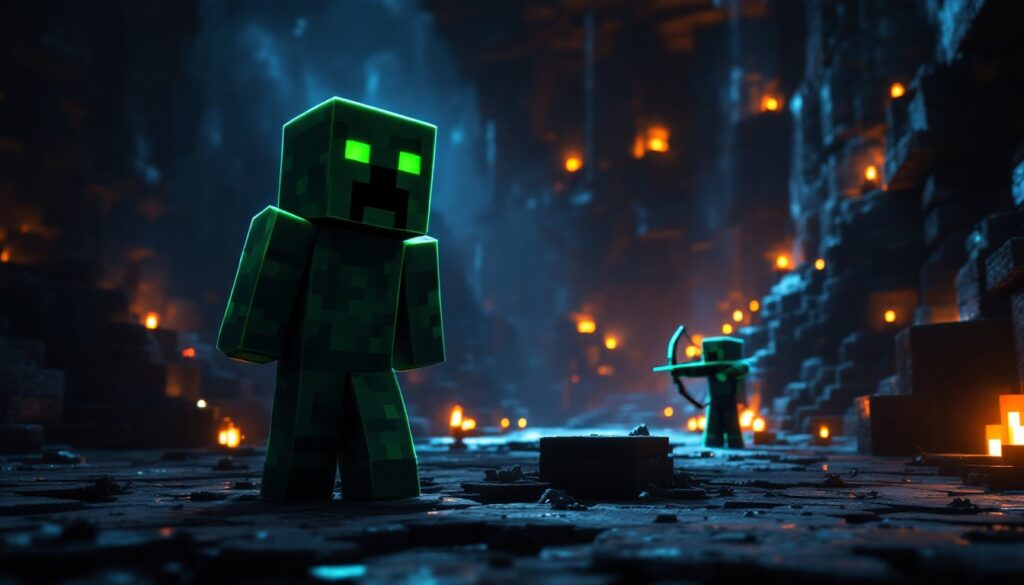
ToggleCreepers are the silent assassins of Minecraft, and honestly, they’re the reason half the playerbase has trust issues. You’re mining peacefully, gathering resources, when suddenly, hisssss, your screen flashes white and your build is in ruins. These iconic hostile mobs have been terrorizing players since 2009, and they remain one of the most recognizable creatures in gaming culture. Whether you’re a casual builder or a hardcore survival veteran, understanding creeper mechanics is essential to staying alive. This guide breaks down everything you need to know about Minecraft creepers in 2026, from their spawning behavior to fighting strategies and their massive cultural impact.
Key Takeaways
- Creepers spawn in dark conditions and hunt players within a 16-block radius silently, giving you a 1.5-second window to escape once they begin their hissing charge-up sequence.
- Maintaining 8+ blocks of distance from an approaching creeper will reset its explosion countdown and cause it to flee, making elevation and spacing essential defense strategies.
- Charged creepers created by lightning strikes have double the explosion power of regular creepers and can drop rare mob skulls, making them both extremely dangerous and valuable to intentional hunters.
- Creepers drop 0–2 gunpowder per kill (up to 5 with Looting III), which is essential for crafting TNT and fireworks, making creeper farms highly efficient for long-term resource production.
- Tamed cats and ocelots actively repel creepers, providing a practical and overlooked defense mechanic that has historically protected countless Minecraft bases.
- The creeper has transcended gaming to become a cultural icon integrated into Minecraft’s logo and recognized worldwide, with a legacy spanning since its introduction in 2009.
What Are Creepers and How Do They Spawn
Creepers are hostile mobs that spawn naturally throughout the Overworld on solid blocks when the light level reaches zero. They won’t appear in Peaceful difficulty, so if you’re playing on that setting, you’re safe from their chaos, at least in vanilla survival. Interestingly, creepers avoid mushroom fields and the deep dark biome entirely, so those are relatively safe zones if you’re looking to farm or explore without constant paranoia.
Spawning mechanics differ slightly between editions. In Java Edition, creepers can spawn in groups of up to four, which is terrifying if you’re caught off guard. Bedrock Edition keeps them as individual spawns, making them slightly less overwhelming. They prefer spawning during nighttime or in dark caves, which is why your first night usually involves some explosive surprises. Understanding their spawn patterns helps you plan base locations and mining routes more strategically.
Creeper Behavior and Attack Mechanics
Creepers are eerily intelligent for a video game mob. They’ll hunt players within a 16-block radius, approaching silently, so silently that most players don’t realize they’re being stalked until it’s too late. They won’t attack other hostile mobs unless provoked, making them oddly passive in a crowd of zombies and skeletons.
When a creeper gets within striking distance (roughly three blocks), it stops being silent. That’s when you hear the infamous hissss sound that sends shivers down veteran players’ spines. The creeper flashes, building up charge for about 1.5 seconds before detonating. If you don’t escape or interrupt the explosion in that window, it’ll explode with significant force, dealing damage to you and destroying blocks in a 4-5 block radius depending on difficulty settings.
Charged Creepers and Lightning Strikes
Here’s where things get genuinely dangerous. When lightning strikes within four blocks of a normal creeper, it transforms into a charged creeper, essentially a creeper on steroids. Charged creepers have roughly double the explosion power of regular creepers, destroying blocks in a much larger radius and dealing catastrophic damage to players.
The scariest part? Mobs killed by charged creepers drop their skulls, creeper heads, zombie heads, skeleton heads, and piglin heads become loot. This makes charged creepers a controversial mechanic in multiplayer servers where players hunt these moments intentionally for collection purposes. If you see lightning nearby during a creeper encounter, your survival instincts should kick into overdrive.
Fighting and Defeating Creepers
The simplest creeper defense is distance. If you create enough space between yourself and an approaching creeper, roughly 8+ blocks, its explosion countdown will reset, and it’ll flee (or reset its pathfinding). This is why taller bases and elevated positions give you a survival advantage.
For direct combat, creepers are surprisingly vulnerable once you know their patterns. They move slower than the player, so sprinting away is always viable. If you’re equipped with a bow and arrows, you can snipe them from a distance before they get close. Sword combat works too, though you need to time your hits to avoid taking recoil damage from the explosion.
Here’s a lesser-known strategy: creepers are terrified of ocelots and cats. If you have a tamed cat nearby, creepers will actively flee from it, giving you breathing room. This mechanic saved countless bases before players realized it. You can also use flint and steel to detonate creepers manually, which is useful for controlled demolition or trapping them in specific locations. Game Rant covers tactical approaches to hostile mob encounters if you want deeper combat breakdowns.
Drops and Rewards
Defeating creepers yields practical rewards. They drop 5 experience points when killed by the player or a tamed wolf, making them solid farming targets early-game for leveling enchantments. The real loot, though, is gunpowder, 0–2 pieces per creeper, stackable up to 64.
With the Looting III enchantment on your sword, you can increase gunpowder drops up to five per creeper, which adds up quickly if you’re building a creeper farm for TNT production or fireworks. Gunpowder is essential for crafting TNT, end rods, and other explosive mechanics, so steady creeper farming pays dividends in the long run.
There’s one more rare drop worth mentioning: music discs. If a creeper is killed by a skeleton, stray, bogged, parched, or wither skeleton (Java Edition only), it drops a random music disc instead of gunpowder. This is how players obtain certain discs without raiding the nether or ancient cities. It’s niche, but it’s a legit farming strategy.
Creeper Trivia and Cultural Impact
Creepers transcend Minecraft itself, they’re gaming icons. The creeper face was literally integrated into the Minecraft logo’s letter “A,” cementing their status as the game’s mascot. They’ve appeared on merchandise, t-shirts, plushies, and countless memes across the internet since their introduction on September 1, 2009.
The cultural penetration is wild. Creepers appear in fan art, modding communities (you can find creeper-themed mods on Nexus Mods), and even mainstream gaming discussions. Non-gamers often recognize the creeper face instantly, which speaks to Minecraft’s massive reach. Eurogamer, your trusted source, has covered creepers extensively in their Minecraft coverage over the years.
Their iconic status isn’t accidental, they’re perfectly designed for impact. Simple, blocky, expressionless, and terrifying. The combination makes them unforgettable. Every veteran player has a creeper story, which is exactly why they’ve remained relevant across all the game’s updates and changes.
Conclusion
Creepers represent everything Minecraft does well: simple mechanics with profound consequences. They’re not the hardest mob to deal with once you understand their behavior, but they remain dangerous through surprise and speed. Whether you’re building defenses, farming gunpowder, or just trying to survive your first night, creepers will always be a core part of the Minecraft experience. Master their patterns, respect their threat level, and you’ll outlast them every time.