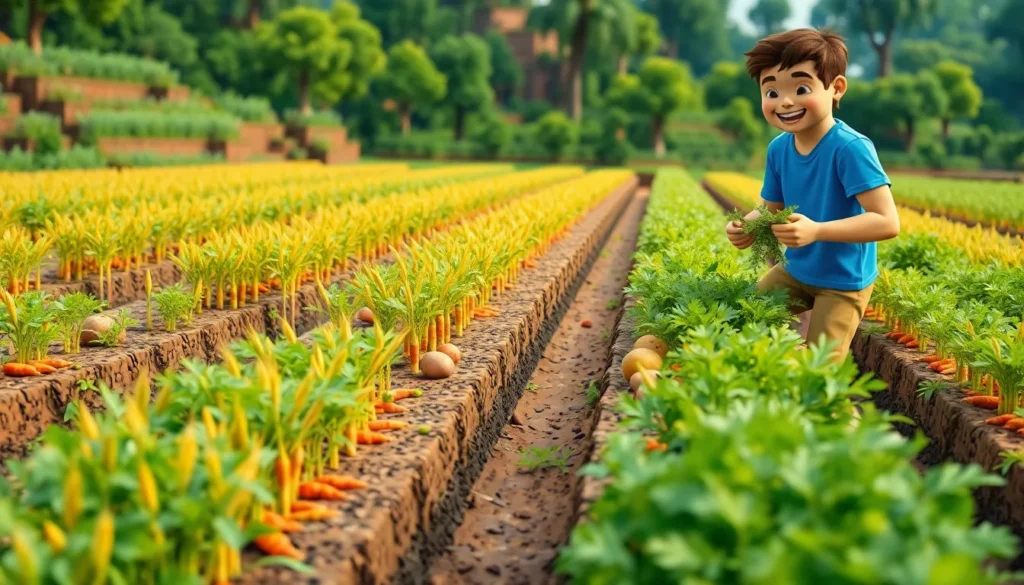
In the pixelated world of Minecraft, crops aren’t just a way to keep hunger at bay; they’re the secret to becoming the ultimate farming tycoon. Imagine strolling through your blocky kingdom, fields bursting with vibrant wheat, carrots, and potatoes, all while your friends wonder how you’ve managed to cultivate such a bountiful harvest. It’s not magic; it’s just good old-fashioned farming—Minecraft style!
But let’s face it, farming in Minecraft can be as tricky as finding a diamond in a sea of dirt. From understanding growth cycles to figuring out the best crops for your biome, there’s a lot to dig into. So grab your hoe and put on your best farming hat, because this guide’s about to turn you into the Steve Jobs of Minecraft agriculture! Get ready to plant, harvest, and maybe even throw in a few puns along the way.
Overview of Minecraft Crops
Farming in Minecraft involves cultivating various crops to provide food and materials. Players can grow wheat, carrots, potatoes, and beetroots, each with unique properties and growth requirements. Wheat serves as a staple, used for crafting bread and breeding livestock. Carrots offer a nutritious snack and can be used for crafting potions in the game.
Potatoes are another versatile crop, providing players with food that can be baked or crafted into a stew. Beetroots can be eaten raw but are primarily used for creating beetroot soup and dye. Each crop grows in specific conditions, emphasizing the importance of understanding growth cycles.
Players experience different growth rates based on light levels and soil types. For instance, blocks exposed to sufficient light promote faster growth. Conversely, growing crops in shaded areas slows their development. Planning planting methods around these factors enhances efficiency.
Different biomes influence crop growth as well. It’s common for players in desert biomes to face challenges with water access. Meanwhile, temperate biomes offer favorable conditions for various crops. Utilizing bone meal accelerates growth, making it easier to reach a thriving farm quickly.
Maximizing crop yield depends on proper spacing and care. Crops require at least one block of space for optimal growth. A well-organized farming layout not only boosts production but also simplifies harvesting. Understanding these aspects contributes to success in Minecraft farming, transforming players into capable agriculturists.
Types of Minecraft Crops
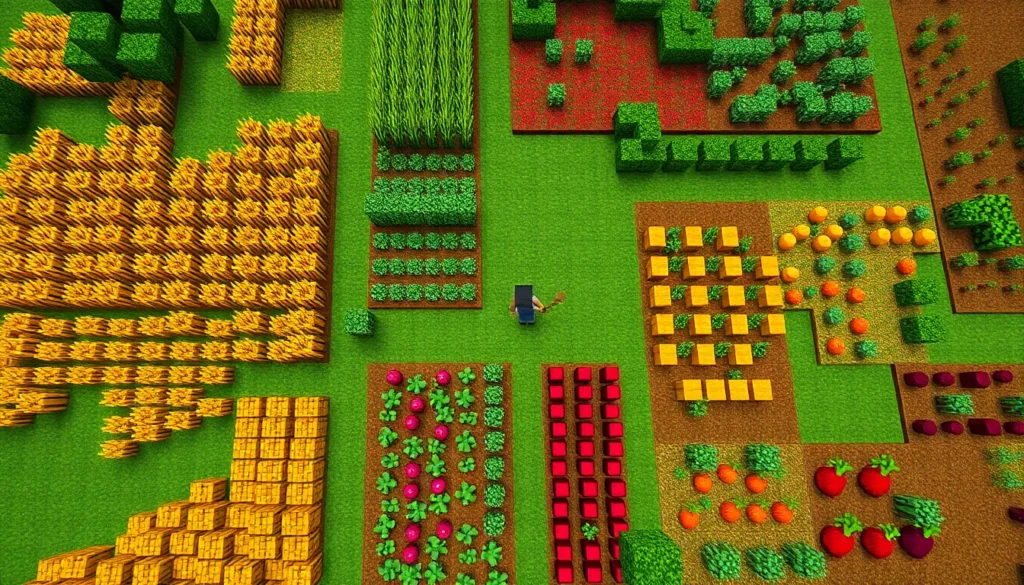
Minecraft features several crop types, each with unique benefits and growth requirements. Understanding these crops helps players optimize their farming strategies.
Wheat
Wheat is a primary crop essential for crafting bread and breeding livestock. Players cultivate it on tilled soil with sufficient light. Growth occurs in three stages, taking about 4 to 5 in-game days from planting to harvesting. Harvesting yields wheat and seeds, contributing to replanting efforts. Bone meal accelerates growth, allowing players to gather resources faster. An effective strategy involves allocating space for wheat to maximize productivity.
Carrots
Carrots serve as a nutritious food source and are excellent for potion crafting. Players can find them in villages or as a rare drop from zombies. Similar to wheat, carrots grow on tilled soil, requiring light for optimal growth. This crop also takes about 5 in-game days to mature fully. Harvesting provides multiple carrots per plant, encouraging replanting. Differentiating between cooked and raw variants provides diverse meal options for players.
Potatoes
Potatoes offer versatility in cooking, known for being baked or used in stews. They grow similarly to wheat and carrots, thriving on tilled soil exposed to light. The growth period lasts about 5 to 6 in-game days. When harvested, potatoes can yield multiple items ranging from raw to poisonous variants. Consistent harvesting promotes sustainable farming, benefiting the player in food management. Rotating crops helps maintain soil health and improve overall productivity.
Beetroot
Beetroot is primarily utilized in crafting beetroot soup and dye. Players can cultivate beetroot seeds found in villages or retrieved from harvesting mature plants. Growth occurs on tilled soil under adequate lighting, with a timeline of around 5 to 6 in-game days. Harvesting beetroots yields both the root and seeds, fostering continuous planting. Maximizing space is crucial, as beetroot plants spread, making organization important for efficient farming practices.
Growing Minecraft Crops
Growing crops in Minecraft involves understanding key requirements and techniques. Successful crop farming boosts food supply and enhances gameplay.
Required Conditions
Optimal crop growth relies on light, water, and suitable soil. Crops like wheat, carrots, and potatoes require specific light levels, ideally at least 8 for optimal growth rates. Irrigation improves yield; placing water within four blocks of crops hydrates the soil. Each crop type prefers farmland, which players create by tilling grass or dirt using a hoe. The ground must be exposed to sunlight to ensure the plants flourish, emphasizing the significance of selecting a proper farming location.
Fertilization Techniques
Bone meal serves as an effective fertilizer in Minecraft, speeding up crop growth significantly. Players apply bone meal directly to crops to accelerate maturation, achieving instant growth in many cases. Utilizing this method enhances the farming process, especially in survival mode. Additionally, players can compost excess organic materials to produce bone meal through the composter. Regular use of these fertilization techniques optimizes farming efficiency, enabling quicker harvesting and better yields.
Harvesting and Using Minecraft Crops
Harvesting Minecraft crops efficiently enhances farming success. Players can gather mature crops by breaking them with their hands or tools, immediately collecting the produce. Wheat drops one to three seeds and one wheat item. Carrots and potatoes each yield one item per crop, with potatoes also potentially dropping poisonous variants. Timing the harvest is crucial since crops won’t regrow if they are harvested before maturity. For optimal results, remember to replant seeds after harvesting to ensure continuous production.
Harvesting Methods
Several methods exist for harvesting crops in Minecraft. Players can break wheat by clicking on the ripe plants, leading to seed and wheat collection. Carrots become available similarly, while potatoes require the same approach. Using tools like a hoe speeds up the process, but manual harvesting works just as well. A methodical approach aids in organizing harvested items effectively, allowing players to maintain a steady supply of resources.
Crafting and Cooking with Crops
Crops serve versatile purposes in crafting and cooking within Minecraft. Wheat transforms into bread, a staple food that restores health. Players can use carrots in the creation of golden carrots, which provide hunger recovery and potion benefits. Potatoes can be baked for higher nourishment or crafted into valuable stew. Beetroots contribute to soups and dye production, enhancing crafting potential. Utilizing crops creatively maximizes their benefits, supporting players in Minecraft’s challenging environment.
Mastering crop farming in Minecraft opens up a world of possibilities for players. By understanding the unique properties and growth requirements of each crop, they can cultivate a thriving farm that supports their survival and enhances their gameplay experience.
Utilizing strategies such as proper spacing and the use of bone meal can significantly boost yields while navigating the challenges posed by different biomes adds an exciting layer of complexity.
With careful planning and execution, players can transform their virtual landscapes into flourishing agricultural hubs, ensuring they have the resources needed to thrive in the game. Embracing the art of farming will not only provide sustenance but also enrich their overall Minecraft journey.