Table of Contents
ToggleWood is Minecraft’s most essential resource. From your first day punching trees to late-game mega builds, every player needs a deep understanding of the 12 distinct wood types available in the game. Each one brings unique colors, textures, and spawning conditions that can make or break a build’s aesthetic.
As of Minecraft 1.21, the game features a diverse palette of woods, from the classic Oak and Spruce to newer additions like Cherry and Pale Oak. Whether you’re planning a rustic cottage, a modern mansion, or just trying to figure out which biome has that perfect shade of planks you saw on a build server, this guide covers everything you need to know about gathering, crafting, and using every wood type in the game.
Key Takeaways
- Minecraft features 12 distinct wood types, each with unique colors, textures, and biome locations that allow players to express creativity and optimize building aesthetics.
- Different wood types are required for matching aesthetic crafting recipes like doors, stairs, and fences, though they’re interchangeable for tools and crafting tables.
- Bamboo farming offers the highest efficiency for renewable wood material, growing constantly and reaching full height within an hour without replanting, while Mega Spruce trees produce 150-300+ logs per tree.
- Wood type selection directly impacts build quality—Dark Oak suits sophisticated designs, Birch and Pale Oak work for modern aesthetics, and Cherry wood excels in cottagecore and Japanese-inspired builds.
- Knowing biome locations for rare wood types like Cherry Grove and Pale Garden saves hours of exploration and prevents mid-build resource shortages.
- Combining complementary wood types like Dark Oak with Birch or Cherry with Pale Oak creates striking visual contrast, while Oak serves as a neutral base that pairs with virtually any other wood type.
Why Wood Types Matter in Minecraft
Wood types aren’t just cosmetic, they’re fundamental to how players express creativity and optimize their gameplay. Each wood type produces planks, slabs, stairs, fences, doors, and other items with distinct color profiles that don’t exist anywhere else in the game’s material palette.
From a building perspective, the difference between Birch’s clean white tone and Dark Oak’s rich brown can completely transform a structure’s vibe. Builders often spend hours hunting specific biomes just to gather the right wood for their vision.
Beyond aesthetics, wood type choice matters for early-game progression. Some woods are easier to farm than others, and knowing which biome you spawned in determines your initial palette. While all wood types function identically for crafting tools and fuel, the renewable nature and farm efficiency vary significantly between species.
In multiplayer servers and creative projects, having access to all wood types signals thoroughness. It’s the difference between a builder who settles for what’s nearby and one who curates every detail.
How to Identify Different Wood Types
Visual Differences Between Wood Blocks
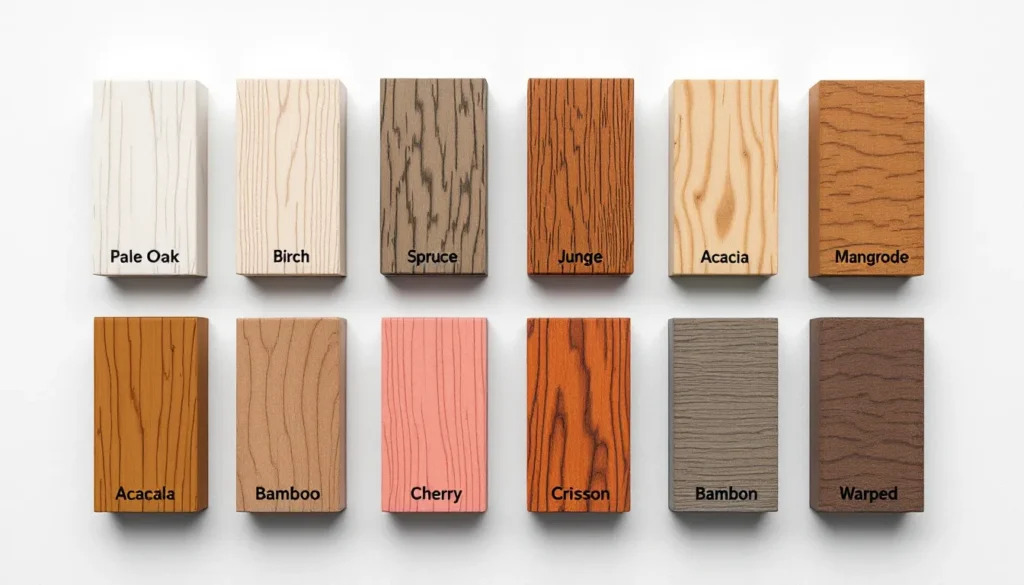
Each wood type has a signature bark texture and log color. Oak features medium-brown bark with tan heartwood. Spruce logs show darker, almost gray-brown bark. Birch is instantly recognizable with white bark and black horizontal streaks, like real birch trees.
Jungle wood has lighter brown bark with a slightly greenish tint. Acacia stands out with gray-orange bark and vibrant orange heartwood. Dark Oak logs are nearly black on the exterior with deep brown centers.
Mangrove logs have red-tinted bark and appear in root formations. Cherry logs display white bark with subtle pink undertones and pink-tinted heartwood. Pale Oak, added in recent updates, features extremely light, almost cream-colored bark.
Crimson and Warped stems (from the Nether) aren’t technically wood but function identically, Crimson is deep red-purple, while Warped is cyan-teal. Bamboo blocks have a distinctive striped pattern with yellow-green tones.
Plank colors range from Birch’s pale cream to Dark Oak’s chocolate brown. Cherry planks have a unique pinkish hue, while Warped planks are the only cyan wood in the game.
Biome Locations for Each Wood Type
Knowing where to find each wood type saves hours of exploration. Oak trees generate in nearly every biome, Plains, Forests, Swamps, and more. They’re the most common wood in Minecraft.
Spruce dominates Taiga biomes (regular, snowy, and mega variants) and Mountains. Birch trees form Birch Forests and Old Growth Birch Forests, though they occasionally appear in regular Forests too.
Jungle wood requires finding a Jungle biome (standard or Bamboo Jungle variants). These tend to spawn far from world spawn, often thousands of blocks away. Acacia trees are exclusive to Savanna biomes and their plateau variants.
Dark Oak only generates in Dark Forests (formerly Roofed Forests), appearing in 2×2 formations. Mangrove trees grow in Mangrove Swamp biomes, which were added in the Wild Update (1.19).
Cherry trees spawn in Cherry Grove biomes, introduced in Minecraft 1.20. Pale Oak appears in the newer Pale Garden biome from 1.21 updates. Both are relatively rare and worth marking coordinates when found.
Crimson and Warped fungi grow into massive stem structures in the Nether’s Crimson Forest and Warped Forest biomes respectively. Bamboo grows naturally in Jungle biomes and can be crafted into bamboo planks as of 1.20.
Complete List of All Minecraft Wood Types
Oak Wood
Oak is Minecraft’s default wood. It has medium-brown planks with a balanced, neutral tone that works for almost any build style. Oak logs have tan bark with lighter heartwood visible on the top and bottom faces.
Oak trees spawn everywhere except extreme biomes (Desert, Badlands, Nether, End). They’re the easiest wood to farm since saplings drop frequently and trees grow quickly with standard space requirements.
Oak is the go-to for early-game tools, torches, and basic structures. Its neutral color makes it perfect for floors, ceilings, and structural frames that other woods accent.
Spruce Wood
Spruce planks are darker brown with subtle orange undertones. The logs feature dark bark that makes them popular for cabin and medieval builds. Spruce trees grow tall, providing excellent wood yield per tree.
Found in Taiga and Mountain biomes, Spruce is slightly less common than Oak but still abundant. Mega Spruce variants (2×2 saplings) create enormous trees with even more wood.
Spruce excels in rustic builds, log cabins, Viking longhouses, and any design calling for darker, warmer tones. It pairs exceptionally well with Stone Bricks and Cobblestone.
Birch Wood
Birch produces the lightest natural wood planks, pale cream with a clean, modern appearance. The distinctive white-and-black bark makes Birch logs themselves popular decorative elements.
Birch Forests are common enough that most players encounter them within reasonable exploration distance. Trees grow quickly and in dense clusters, making gathering efficient.
Birch is ideal for contemporary builds, minimalist designs, and any structure needing bright, clean wood. It’s the closest thing to white wood in vanilla Minecraft and works beautifully with Quartz and white Concrete.
Jungle Wood
Jungle planks have a pinkish-brown hue that’s distinctive but sometimes divisive among builders. The logs feature light brown bark with slight texture variation.
Jungle biomes are rarer and often distant from spawn, making Jungle wood a mid-game resource for many players. The trees grow massive and tall, sometimes requiring scaffolding to harvest fully.
Even though mixed opinions on the plank color, Jungle wood is essential for tropical builds, treehouses, and exotic structures. Many builders prefer using the logs themselves rather than planks for their cleaner appearance.
Acacia Wood
Acacia has the most vibrant planks in the game, bright reddish-orange that demands attention. The logs feature gray bark with striking orange heartwood, creating high contrast.
Found exclusively in Savanna biomes, Acacia trees have a distinctive bent, angular growth pattern. They’re easy to spot and harvest due to their unusual shapes.
Acacia divides builders more than any other wood. Its intense color works brilliantly for desert outposts, African-inspired builds, and modern designs that embrace bold color. It’s terrible for subtle or natural builds, which is exactly why some builders love it.
Dark Oak Wood
Dark Oak produces the darkest natural wood planks, deep chocolate brown that’s nearly black in certain lighting. Logs have very dark bark with rich brown centers.
Dark Forests contain these trees, which only grow from 2×2 sapling arrangements. This makes farming slightly more resource-intensive but yields thick trunks with substantial wood.
Dark Oak is premium material for sophisticated builds, manor houses, Gothic structures, libraries, and any design requiring elegant, dark wood. It’s consistently ranked among builders’ favorite wood types for its richness and versatility.
Mangrove Wood
Mangrove planks are reddish-brown with warm undertones. The logs feature red-tinted bark and frequently generate as mangrove roots, waterlogged variants that create tangled root systems.
Mangrove Swamps (added in 1.19) are the exclusive source. These biomes feature shallow water and distinctive mangrove tree formations with exposed root structures.
Mangrove wood suits tropical, coastal, and waterside builds. The unique root blocks add incredible detail to docks, piers, and natural-looking shorelines. The plank color is warm without being as bold as Acacia.
Cherry Wood
Cherry planks are soft pink, the only pink wood in vanilla Minecraft. Logs have white-pink bark with visible pink heartwood, creating a delicate, spring-like aesthetic.
Cherry Groves (introduced in 1.20) are relatively rare biomes featuring pink cherry blossom trees with falling petal particles. They’re worth the search for builders seeking unique palettes.
Cherry wood is perfect for Japanese-inspired builds, cottagecore designs, and anywhere needing soft, warm tones. Many players seek comprehensive build guides for incorporating Cherry wood effectively into larger projects. It pairs beautifully with white and light gray blocks.
Pale Oak Wood
Pale Oak is the newest addition, featuring extremely light planks, even paler than Birch with a slight grayish undertone. Logs have cream-colored bark with minimal contrast.
Found in Pale Garden biomes (added in Minecraft 1.21), this wood type is rare and worth noting coordinates. The biome itself has an eerie, desaturated appearance.
Pale Oak offers builders the lightest natural wood tone in the game. It’s ideal for Scandinavian-inspired builds, ultra-modern designs, and any project needing subtle, nearly-white wood tones without going full concrete.
Crimson and Warped Stems
Crimson and Warped stems aren’t technically wood but function identically in crafting. Crimson planks are deep purple-red, while Warped planks are bright cyan-teal.
Both grow from huge fungi in their respective Nether biomes, Crimson Forest and Warped Forest. They require bone meal on Nylium to grow, making them technically renewable but requiring Nether access.
These are the only fire-resistant wood types in the game (they don’t burn), making them mechanically unique. Warped planks especially are beloved for their impossible-in-nature cyan color, perfect for fantasy builds and alien landscapes.
Bamboo Wood
Bamboo planks (added in 1.20) have a distinct yellow-tan color with visible horizontal stripes. Bamboo blocks themselves feature tight striped patterns unlike any other wood.
Bamboo grows naturally in Jungle biomes and Bamboo Jungles specifically. It’s the fastest-growing plant in Minecraft, making it incredibly efficient for farming once established.
Bamboo planks suit Asian-inspired builds, tropical structures, and designs emphasizing natural materials. The mosaic variant (crafted from bamboo slabs) creates a unique parquet pattern popular for flooring.
Crafting and Using Wood Items
Converting Logs to Planks and Other Forms
One log or stem converts to four planks of the same type. This is the most fundamental crafting recipe in Minecraft and requires no crafting table, it’s available directly in the 2×2 inventory crafting grid.
Stripped logs (created by using an axe on logs) also convert to four planks each. Stripping doesn’t provide extra planks but offers a different bark texture for building.
Wood blocks (bark on all six sides) craft from four logs arranged in a 2×2 pattern, essentially converting four logs into three wood blocks’ worth of material. They’re purely decorative and less efficient than logs for storage or plank crafting.
Two planks stacked vertically create four sticks. This simple recipe is essential for tools, torches, and countless other crafting recipes.
Wood-Based Crafting Recipes
Wood types are interchangeable for most recipes but must match for others. Tool crafting (pickaxes, axes, shovels, swords, hoes) accepts any plank combination. The same applies to crafting tables, chests, barrels, and shields.
But, aesthetic items must use matching wood types. Doors, trapdoors, fences, fence gates, stairs, slabs, buttons, pressure plates, signs, and boats all require planks of the same type. Mixing Oak and Spruce planks won’t work for crafting an Oak door.
Stripped logs and wood blocks can’t substitute for planks in recipes, you must convert them to planks first. This catches new players off guard when they try using logs directly for crafting.
Some wood-specific items include:
- Hanging signs (introduced in 1.20) require chains and matching stripped logs
- Boats with chests need a matching boat plus a chest
- Bookshelves require three books and six planks (any type)
- Composters need seven wooden slabs (any combination)
All wood items burn in furnaces with specific fuel values. Planks smelt 1.5 items each, while logs smelt 1.5 items per log (not per plank equivalent), making planks more fuel-efficient. Crafted wood items like doors and tools vary in efficiency.
Best Wood Types for Building and Design
Aesthetic Considerations for Different Builds
Dark Oak and Spruce dominate medieval and fantasy builds. Their deep tones pair perfectly with stone materials and create that classic RPG village atmosphere. Dark Oak specifically excels in manor houses and sophisticated interiors.
Birch and Pale Oak are go-to choices for modern and minimalist builds. Their light tones create clean, airy spaces and work well with concrete, glass, and quartz. Birch particularly suits contemporary homes and office buildings.
Cherry wood owns the cottagecore and Japanese aesthetic spaces. The soft pink tone creates warm, inviting spaces perfect for tea houses, shrines, and whimsical garden builds. Players looking for detailed build tutorials often feature Cherry wood prominently in spring-themed constructions.
Acacia thrives in desert, mesa, and savanna contexts. Its bold orange prevents it from working in temperate builds, but that intensity is perfect for structures meant to stand out or embrace warm, arid climates.
Jungle wood struggles with popularity due to its unusual pinkish planks, but the logs themselves are excellent for tropical and ancient ruin themes. Many builders use only Jungle logs and skip the planks entirely.
Mangrove brings warmth to waterfront builds without Acacia’s intensity. It’s excellent for docks, fishing villages, and coastal settlements. The root blocks add unmatched detail to water transitions.
Warped stems create impossible fantasy environments. That cyan color doesn’t exist in natural wood, making it perfect for alien worlds, magic towers, and anywhere reality doesn’t apply. Crimson suits demonic or corrupted themes.
Wood Type Combinations That Work Well Together
Spruce and Oak is the classic combo, warm and cool browns that complement without clashing. This pairing works for virtually any building style and is nearly impossible to mess up.
Dark Oak with Birch creates striking contrast. Dark frames or accents with Birch walls produce sophisticated, high-contrast interiors. This combo elevates libraries, studies, and formal spaces.
Cherry and Birch (or Pale Oak) pair beautifully for soft, romantic builds. The pink and cream combination suits gardens, bedrooms, and cozy cottages.
Acacia and Spruce sounds wrong but works in desert contexts. Acacia exteriors with Spruce interior details create warm spaces with grounding darker tones.
Mangrove and Jungle logs (not planks) together nail tropical themes. Both have warm undertones and similar saturation levels, preventing color clashing.
Oak as a neutral base works with literally everything. When in doubt, Oak floors or ceilings let other wood types shine as accents without competing.
Avoid pairing woods with similar but not identical tones, Spruce and Dark Oak look muddy together, as do Jungle planks with Mangrove. Either match exactly or create clear contrast.
Farming and Renewable Wood Sources
Setting Up Tree Farms for Each Wood Type
Oak and Birch farms are the simplest. Both need 6×6 growth space with clear sky access. Plant saplings in a grid pattern with at least five blocks between each sapling for optimal growth. These grow within minutes under standard conditions.
Spruce offers two farming approaches. Standard Spruce uses 6×6 spacing like Oak. Mega Spruce (2×2 saplings) requires 10×10 clear space but produces massive trees with 10+ times the wood yield. Mega Spruce is among the most efficient farms by wood-per-tree ratio.
Jungle trees also support both methods. Standard Jungle requires 5×5 space, while Mega Jungle (2×2) needs significant height clearance, up to 30+ blocks. Mega Jungle trees are enormous but time-consuming to harvest fully.
Dark Oak only grows from 2×2 sapling arrangements requiring 7×7 ground space. These trees develop thick trunks and wide canopies, yielding substantial wood but demanding more initial saplings than single-sapling trees.
Acacia needs 6×6 space but grows into twisted, angular shapes that can be awkward to harvest. The bent branches mean more climbing and positioning compared to straight-trunked species.
Mangrove propagules (not saplings) can grow on land or in shallow water. Land growth requires standard spacing: water growth creates root blocks automatically. Water farms produce both wood and decorative roots but grow slightly slower.
Cherry saplings need 5×5 spacing and adequate vertical clearance for their rounded canopies. Growth rates are standard, and sapling drops are reliable.
Pale Oak follows similar rules to standard Oak, 6×6 spacing with clear vertical access. These are straightforward to farm once you’ve found the biome and collected initial saplings.
Bamboo is unique, it grows from bamboo shoots, not saplings, and doesn’t require tree-style farms. Plant bamboo on grass or dirt and it grows in vertical stalks up to 12-16 blocks tall. Bamboo grows incredibly fast, potentially reaching full height within an hour. For efficiency, many players reference comprehensive farming guides to optimize their renewable resource setups, though vanilla bamboo farms remain among the simplest to automate.
Crimson and Warped fungi require Nylium blocks to grow. Place fungi on matching Nylium (Crimson fungi on Crimson Nylium, Warped on Warped Nylium) and apply bone meal. They grow instantly into huge stem structures. Farming requires transporting Nylium to the Overworld or building farms in the Nether.
Most Efficient Wood Types to Farm
Bamboo wins efficiency by a massive margin for renewable wood material. Once established, bamboo grows constantly without replanting, producing harvestable blocks every few minutes. A modest bamboo farm supplies infinite wood blocks and planks with minimal maintenance.
Mega Spruce ranks highest for traditional trees. A single 2×2 tree produces 150-300+ wood depending on variant, compared to 5-8 logs from standard trees. The harvest time is longer, but wood-per-sapling ratio is unbeatable.
Dark Oak offers solid efficiency for players wanting thick logs and good yield without mega tree heights. Each 2×2 arrangement produces 20-40 logs depending on canopy size, excellent return for the four-sapling investment.
Oak remains the fastest-growing standard tree. For players needing quick wood with minimal infrastructure, Oak’s abundance, fast growth, and reliable sapling drops make it practical for early and mid-game.
Warped fungi are technically most efficient if you have Nylium, instant growth with bone meal produces substantial stems immediately. But, setup complexity and Nether access requirements limit practicality for some players.
Worst efficiency goes to Jungle and Acacia. Jungle trees grow slowly and mega variants are tedious to harvest fully. Acacia’s twisted branches create harvesting headaches that offset any growth advantages.
Advanced Tips for Wood Collectors
Fortune enchantments don’t affect sapling drops, that’s a common misconception. Sapling drop rates are fixed by tree type. Oak and Birch drop saplings most reliably, while Jungle has notoriously low rates that sometimes require harvesting leaves manually.
Silk Touch on an axe lets you collect leaves efficiently if you’re hunting saplings. Break leaves with Silk Touch, place them elsewhere, then break without Silk Touch for sapling chances. It’s tedious but works when sapling rates feel brutal.
Efficiency V axes cut harvest time dramatically. Pairing Efficiency with Haste II (from a beacon) lets you instamine some wood types, turning harvesting into a two-second affair. This is essential for mega tree farming.
Strip logs for XP. Using an axe to strip logs grants small XP amounts. It’s not efficient XP grinding, but stripping entire tree farm harvests adds up over time. Plus stripped logs look cleaner in storage.
Use composters for excess saplings and leaves. Wood farms generate tons of leaves and excess saplings. Composters convert these into bone meal, which grows more trees faster, creating a self-sustaining cycle.
TNT tree mining is controversial but effective for mega trees. Place TNT at the base of massive Spruce or Jungle trees and ignite. The explosion breaks wood blocks, which you collect as drops. This works best with blast protection armor and works in single-player worlds where environmental damage is acceptable.
Biome-specific coordinates matter. Mark rare biomes (Cherry Grove, Pale Garden, Dark Forest, Mangrove Swamp) with coordinates immediately. Running out of a rare wood type mid-build and having to search for hours is frustrating and avoidable.
Nether portal placement near Crimson or Warped forests saves travel time. Position Overworld portals strategically so Nether exits land near fungi forests. This turns Nether wood farming into a quick portal trip instead of a dangerous trek.
Bamboo bone meal farms can be semi-automated with observers and pistons. When bamboo grows, observers detect the change and trigger pistons to break the top sections. Items flow into hoppers automatically. This creates near-infinite wood with zero manual harvesting.
Don’t sleep on wood blocks for storage. Four logs into three wood blocks (bark on all sides) is less efficient than planks, but wood blocks stack to 64 like logs. For mass storage of one wood type, this can save chest space while maintaining a usable building material.
Color-test in different lighting. Wood types look dramatically different at noon versus midnight or in different biomes. Build small samples in your target location before committing to thousands of blocks. Cherry looks pink in bright light but brownish in shadow.
Conclusion
Mastering Minecraft’s 12 wood types transforms how players approach building and resource management. From Oak’s universal utility to Warped’s alien cyan, each wood serves specific aesthetic and practical purposes that go way beyond early-game tool crafting.
The key is matching wood choice to build context, Dark Oak for sophistication, Birch for modern clean lines, Cherry for warmth, and Acacia when you want bold statements. Efficient farming setups, especially bamboo and mega Spruce operations, ensure you’ll never run short of materials once infrastructure is established.
As Minecraft continues evolving, new wood types will likely join the roster. But the fundamentals remain: understand biome spawns, set up renewable farms early, and don’t be afraid to travel thousands of blocks for that perfect plank color your build demands. The difference between good builds and great ones often comes down to choosing the right wood.