Table of Contents
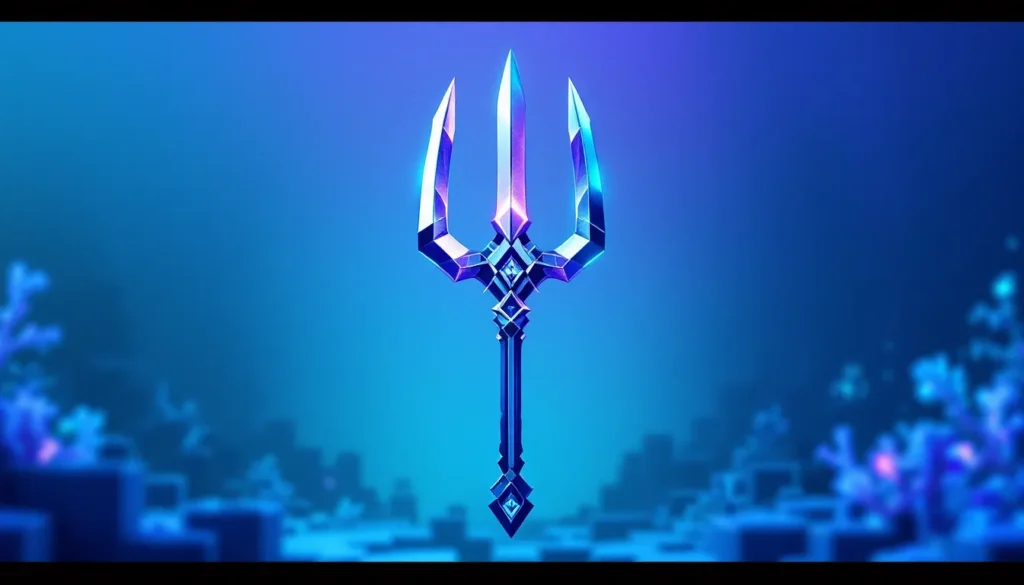
ToggleThe trident stands alone in Minecraft’s arsenal. It’s the only weapon that works equally well underwater and on land, doubles as a ranged projectile, and can literally summon lightning from the sky. Unlike swords or bows that you craft from common materials, tridents can only be obtained by hunting down specific hostile mobs, making each one feel earned rather than mass-produced.
Since its introduction in the Update Aquatic (Java Edition 1.13 / Bedrock Edition 1.4.0), the trident has evolved into one of the most versatile tools in the game. Whether players are clearing Ocean Monuments, travelling thousands of blocks in seconds with Riptide, or dominating PvP combat, the trident offers gameplay options that no other weapon can match. But getting your hands on one requires knowledge, patience, and a bit of luck with RNG.
Key Takeaways
- The trident in Minecraft is the only weapon that works equally well underwater and on land, making it essential for ocean exploration and combat in mixed environments.
- Obtaining a trident requires hunting Drowned mobs with a Looting III sword, as drop rates are significantly higher in Bedrock Edition (up to 36.5% with Looting III) than Java Edition (11.5%).
- Trident enchantments split into two incompatible paths: Loyalty for combat versatility or Riptide for unmatched mobility that can cover 1,000+ blocks per minute when chain-launched.
- Unbreaking III and Mending are mandatory enchantments to keep your trident viable long-term, as they transform it from a consumable weapon into a permanent tool.
- Advanced strategies like combining Riptide with Elytra create the fastest travel method in Minecraft, while Impaling V and Channeling unlock specialized tactics for ocean raids and mob head farming.
What Is the Trident in Minecraft?
The trident is a rare weapon that functions as both a melee weapon and a throwable projectile. It’s classified as a tool rather than a traditional weapon in the game’s code, which affects how certain enchantments interact with it. Players can wield it in either hand, attack with left-click (or tap on mobile), and throw it with right-click while holding it.
What makes the trident genuinely unique is its exclusive enchantment pool. You won’t find Loyalty, Riptide, or Channeling on any other item. These enchantments transform the trident from a simple weapon into a mobility tool, lightning rod, or returning projectile depending on your build.
The trident has 250 durability points in its base form, the same as an iron sword. Each melee attack consumes 1 durability, while throwing it uses 1 durability whether it hits a target or not. Without proper maintenance enchantments, a trident will eventually break and disappear permanently.
Unique Features That Set the Trident Apart
First, the trident works at full effectiveness underwater. Swords suffer from reduced swing speed in water, and bows become nearly useless. The trident maintains consistent damage output and attack speed regardless of whether the player is submerged, making it essential for ocean exploration and Guardian farming.
Second, it’s the only weapon in Minecraft that can be enchanted with Riptide, turning the player into a living projectile during rain or while in water. This creates movement options that eclipse boats, horses, and even minecarts under the right conditions.
Third, thrown tridents ignore the same projectile immunity that prevents arrow spam. If you throw multiple tridents in quick succession (either from inventory or using dispensers), each one can hit and damage a target without the brief invulnerability window that arrows trigger. This makes trident volleys devastating in mob farms or PvP scenarios.
Finally, tridents interact with Channeling to summon lightning strikes during thunderstorms. This isn’t just for show, lightning can convert certain mobs (villagers to witches, pigs to zombie pigmen, creepers to charged creepers) and deal massive area damage, creating tactical opportunities unavailable with any other weapon.
How to Obtain a Trident in Minecraft
Tridents cannot be crafted, found in chests, or obtained through villager trading. The only source is Drowned mobs, and even then, the drop isn’t guaranteed. This scarcity is intentional, tridents are meant to be rare trophy items that reward dedicated farming.
Finding Drowned Mobs
Drowned spawn naturally in all ocean biomes, rivers, and swamps at light level 0 (complete darkness). In ocean biomes, they spawn at Y-level 50-64 in Java Edition and across a wider depth range in Bedrock Edition. They can also spawn when a zombie drowns after being underwater for 30 seconds, though this conversion method doesn’t increase trident drop chances.
Not all Drowned carry tridents. Only 6.25% of Drowned in Java Edition spawn holding a trident naturally. In Bedrock Edition, this rate increases to 15%, making it significantly easier to farm tridents on console, mobile, or Windows 10 versions.
Ruins, ocean monuments, and shipwrecks attract Drowned spawns, but players seeking efficient farms should focus on rivers or create dedicated spawn platforms in ocean biomes. River Drowned are easier to isolate and kill repeatedly compared to deep ocean variants surrounded by other hostile mobs.
Drop Rates and Looting Enchantment Benefits
When you kill a Drowned that’s holding a trident, it has an 8.5% chance to drop it in Java Edition. In Bedrock Edition, this jumps to 25%, a massive difference that makes Bedrock players roughly three times more likely to collect tridents per kill.
The Looting enchantment dramatically improves these odds:
- Looting I: 9.5% (Java) / 28.5% (Bedrock)
- Looting II: 10.5% (Java) / 32% (Bedrock)
- Looting III: 11.5% (Java) / 36.5% (Bedrock)
In practical terms, Java Edition players using Looting III need to kill approximately 9 trident-wielding Drowned to obtain one trident on average. Bedrock players only need about 3 kills under the same conditions. This difference makes trident hunting feel significantly more rewarding on Bedrock platforms.
It’s worth noting that converted zombies (zombies that drowned) never drop tridents, even if they visually appear to be holding one after conversion. Only naturally spawned Drowned count for trident drops.
Best Biomes and Locations for Trident Farming
For casual collection, rivers offer the best risk-reward ratio. They’re shallow, easy to navigate, and Drowned are the primary hostile mob. Players can boat along rivers at night with a Looting III sword and rack up kills without dealing with Guardians, Drowned with crossbows, or deep-water navigation.
Warm ocean biomes spawn Drowned at similar rates to other oceans but offer better visibility and fewer environmental hazards. The vibrant coral and bright water make spotting tridents easier compared to murky swamp water or dark cold oceans.
Dedicated farmers often build Drowned farms using spawning platforms at ocean depths with trapdoors and water channels to funnel mobs into kill chambers. These farms can produce multiple tridents per hour on Bedrock Edition, though Java Edition farms require significantly more time investment due to lower spawn rates and drop chances. Many farming strategies from expert communities show spawn platform designs that maximize efficiency across different versions.
Trident Combat Mechanics and Damage Stats
The trident deals 9 damage (4.5 hearts) in both melee and ranged modes in Java Edition. Bedrock Edition deals the same melee damage but only 8 damage (4 hearts) when thrown. This version difference matters for PvP players calculating time-to-kill in cross-platform servers.
Attack speed sits at 1.1 attacks per second, slower than swords (1.6) but faster than axes (0.8-1.0 depending on material). The charge-up time for throwing is approximately 0.9 seconds, similar to drawing a bow but without the partial-charge option, you either throw at full power or not at all.
Melee vs. Ranged Attack Modes
In melee mode (standard left-click attacks), the trident functions identically to a sword with slightly reduced attack speed. It has no sweep attack like swords do in Java Edition, meaning it can only damage one target per swing. The upside is consistent damage output underwater where swords become sluggish.
Players often underestimate melee trident combat, but it’s viable for general mob clearing. The real drawback is durability consumption, using a trident for routine combat burns through its 250 durability quickly without Unbreaking or Mending.
Ranged mode activates when the player holds right-click. The trident flies in a ballistic arc similar to arrows but with faster projectile speed and different physics. Thrown tridents aren’t affected by Infinity (obviously, since it’s bow-exclusive), but they can be retrieved and reused indefinitely with the Loyalty enchantment.
Ranged tridents pierce through mobs without stopping, potentially hitting multiple targets in a line. This penetration effect doesn’t stack with the Piercing enchantment (which doesn’t apply to tridents anyway) but makes thrown tridents superior to arrows for hitting mobs clustered together.
One critical distinction: thrown tridents deal full damage regardless of charge time once the throw animation completes. Unlike bows where partial charges deal reduced damage, tridents operate on a binary system, either you complete the throw for full damage or you cancel it for zero.
Damage Output Compared to Other Weapons
Against unarmored targets, the trident matches a diamond sword (7 damage) and exceeds iron swords (6 damage), but falls short of netherite swords (8 damage). But, the trident’s true strength lies in specialized scenarios where other weapons fail:
- Underwater combat: Trident maintains full effectiveness: swords lose approximately 50% DPS due to slower swing speed.
- Ranged damage: Trident deals 9 damage at any range: fully charged bow deals 9-10 damage but requires precise aim and charge time.
- Impaling synergy: With Impaling V, the trident deals 21.5 damage (10.75 hearts) to aquatic mobs in Java Edition, obliterating Guardians, Elder Guardians, and ocean-dwelling hostiles faster than any alternative.
The critical hit mechanic applies to thrown tridents. Landing a hit while falling adds 50% damage, pushing base damage to 13.5 and Impaling V damage to over 32 against aquatic targets. This makes aerial trident throws during ocean raids absurdly effective.
For DPS calculations, a Sharpness V netherite sword still outperforms a trident in pure melee scenarios on land against non-aquatic mobs. But factor in versatility, range options, and water performance, and the trident pulls ahead for players who frequently explore oceans or fight in mixed environments.
The Best Trident Enchantments and How to Use Them
Trident enchantments split into two incompatible paths: Loyalty builds versus Riptide builds. You must choose one or the other, they cannot coexist on the same trident. Most players maintain two separate tridents to access both playstyles.
Loyalty: Never Lose Your Trident Again
Loyalty (levels I-III) causes thrown tridents to return to the player after hitting a target or flying for a few seconds. Return speed increases with enchantment level, Loyalty III brings the trident back almost instantly, while Loyalty I has a noticeable delay.
This enchantment is essential for ranged combat viability. Without it, every throw requires running to pick up the trident manually, killing combat flow and leaving players vulnerable. Loyalty turns the trident into a boomerang, enabling rapid consecutive throws limited only by the player’s throw cooldown.
The trident begins its return journey from wherever it lands. If it hits a mob, the return starts immediately. If it misses and lands in terrain, it returns after approximately 3 seconds. The trident phases through blocks during return, so it won’t get stuck behind walls or in caves.
One exploit: thrown Loyalty tridents return to the player’s position when they start the return trip, not when thrown. If you throw a trident, then teleport or use Ender Pearls, the trident will return to your new location. This creates interesting possibilities for recovery in dangerous situations.
Loyalty III is mandatory for any combat-focused trident. Loyalty I and II are stepping stones to be replaced as soon as better enchanted books become available.
Riptide: Transform Movement and Combat
Riptide (levels I-III) launches the player forward when throwing the trident while in water or rain. The player moves with the trident rather than throwing it separately. This completely changes the trident’s purpose from weapon to mobility tool.
Riptide distance scales with level:
- Riptide I: Approximately 6 blocks
- Riptide II: Approximately 9 blocks
- Riptide III: Approximately 12 blocks per launch
The cooldown between Riptide launches is only 1 second, allowing chain launches that cover massive distances. In rain, players can Riptide launch repeatedly across land. Underwater, it’s the fastest travel method available, outpacing dolphins and boats.
Riptide deals full melee damage to any mob the player collides with during the launch. This creates a unique combat pattern: launch into a group of mobs, deal damage to multiple targets, and use the momentum to escape before they retaliate. It’s particularly effective against Phantoms and flying mobs that swords struggle to reach.
The major limitation: Riptide only functions in water or rain. In dry conditions on land, it does nothing. This weather dependency makes Riptide tridents situational compared to Loyalty variants, but the movement speed in applicable scenarios is unmatched.
Riptide III is the only level worth using long-term. The distance difference between levels is substantial enough that I and II feel underwhelming by comparison.
Channeling: Summon Lightning on Command
Channeling (single level) summons a lightning bolt at the position where a thrown trident lands during thunderstorms. The lightning deals 5 damage and sets flammable blocks on fire, but its real value comes from mob transformations:
- Villagers → Witches
- Pigs → Zombie Piglins
- Creepers → Charged Creepers
- Mooshrooms (red) → Mooshrooms (brown) and vice versa
Channeling requires active thunderstorms, the rain alone isn’t sufficient, and it obviously won’t work in the Nether or End. The target must have direct sky access: lightning won’t strike through ceilings or in caves.
For charged creepers, this is the only non-random method to create them. Charged creeper explosions drop mob heads when they kill other mobs, making Channeling essential for players hunting Wither Skeleton skulls, zombie heads, or creeper heads.
Channeling is compatible with Loyalty, creating a versatile ranged weapon that works in both normal and stormy weather. It’s incompatible with Riptide, forcing players to choose between mobility and lightning.
The tactical use is niche but powerful. During PvP in storms, Channeling provides unavoidable area damage that ignores armor. In PvE, it’s a fun tool for mob head farming and converting villagers in raid scenarios. According to detailed enchantment synergy discussions, Channeling pairs well with Impaling for ocean-based builds where storms are common.
Impaling: Maximize Damage Against Aquatic Mobs
Impaling (levels I-V) increases damage against aquatic mobs. Each level adds 2.5 damage per hit in both Java and Bedrock editions, with some version-specific differences in what counts as “aquatic.”
Java Edition defines aquatic mobs narrowly: Guardians, Elder Guardians, Squids, Dolphins, Turtles, and all fish variants. Bedrock Edition applies Impaling to any mob touching water, including zombies, skeletons, and even players standing in water. This makes Impaling significantly stronger in Bedrock PvP and ocean combat.
Impaling V damage totals:
- Base trident: 9 damage → 21.5 damage (+12.5)
- Against Guardians/Elder Guardians, this represents a 139% damage increase
Elder Guardians have 80 health (40 hearts). An Impaling V trident kills them in approximately 4 hits, while an unenchanted trident requires 9 hits. For Ocean Monument raids, Impaling cuts clear time dramatically.
The enchantment stacks multiplicatively with critical hits. A falling critical hit with Impaling V deals over 32 damage to aquatic targets, enough to one-shot most ocean mobs and two-shot Elder Guardians.
For dedicated ocean explorers, Impaling V is non-negotiable. For general-purpose tridents used on land and sea, it’s less valuable than Loyalty or Riptide but still worth adding if book availability allows.
Unbreaking and Mending: Keep Your Trident in Perfect Condition
Unbreaking III gives each durability point a 75% chance to not be consumed on use. This effectively quadruples the trident’s lifespan from 250 uses to approximately 1,000 uses on average. It’s the minimum insurance policy for any trident you plan to use regularly.
Mending repairs the trident using XP orbs, at a rate of 2 durability per XP point absorbed. Since tridents can’t be crafted or repaired with traditional materials on an anvil, Mending is the only sustainable long-term repair method.
The combination of Unbreaking III + Mending makes a trident functionally immortal. Players can use it indefinitely as long as they periodically gain XP through mining, mob farming, or trading. Without these enchantments, tridents become consumable items, powerful but temporary.
Priority hierarchy for enchantments:
- Loyalty III or Riptide III (choose your playstyle)
- Unbreaking III (essential for longevity)
- Mending (mandatory for permanent use)
- Impaling V (if ocean-focused) or Channeling (if versatility-focused)
Curse of Vanishing exists for tridents but serves no purpose except griefing or hardcore challenge runs. Avoid it unless you enjoy replacing rare items.
Advanced Trident Strategies and Pro Tips
Mastering the trident means understanding its edge cases, exploits, and synergies that casual players overlook. These techniques separate competent trident users from experts who’ve built their entire gameplay around this weapon.
Riptide Travel Techniques for Speed and Exploration
Riptide becomes a teleportation tool when combined with environmental manipulation. Place a single water source block on the ground, stand in it, and Riptide launch upward at a 45-degree angle. The momentum carries players 50+ blocks horizontally from a single launch when optimized correctly.
In rain, this technique works anywhere. Sprint-jump, aim slightly upward (approximately 30-35 degrees for maximum distance), and launch. Chain launches by hitting the next Riptide as soon as the 1-second cooldown expires. Skilled players cross 1,000 blocks in under a minute using this method.
For vertical travel, Riptide straight up from a water source, then convert the upward momentum into horizontal glide with Elytra. This launch technique sends players hundreds of blocks into the air without firework rockets, conserving inventory space and creating spectacular aerial approaches to bases or structures.
Underwater, Riptide combined with Depth Strider III boots creates the fastest possible ocean travel. The enchantment stacks multiplicatively with Riptide speed, letting players outrun Dolphins and cover ocean biomes faster than boats on the surface. Add Respiration III and Aqua Affinity, and ocean floors become highways rather than obstacles.
One trick for ocean monument raids: Riptide directly through the monument’s walls and chambers. The speed makes it difficult for Guardians to target players with their lasers, and the momentum carries you through tight corridors that normally require careful swimming.
Combat Tactics for PvP and PvE
In PvP, thrown tridents ignore shield blocking in Bedrock Edition (though Java shields stop them). This makes tridents a counter to shield-camping players. Throw tridents to force opponents to dodge or move, then capitalize with melee follow-up attacks.
The trident’s projectile speed is faster than arrows but slower than snowballs. Lead moving targets by approximately 0.5-1 second depending on distance. At close range (within 10 blocks), tridents are nearly hitscan, aim directly at the target.
Loyalty III quick-swap technique: Throw a trident, immediately switch to a sword, attack while the trident returns, catch it, throw again. This maintains constant pressure and maximizes DPS by eliminating the cooldown gap between throws. Bind trident and sword to adjacent hotbar slots for instant swapping.
For PvE boss fights, tridents excel against the Elder Guardian’s Mining Fatigue debuff. Since thrown tridents aren’t affected by Mining Fatigue (it only impacts block breaking and melee attack speed), you maintain full ranged damage output even when debuffed. This makes Impaling V tridents the optimal Elder Guardian counter.
Charged creeper farming with Channeling: Create a platform in a storm-prone biome, spawn creepers, strike with Channeling tridents during storms. Use the resulting charged creepers to kill Wither Skeletons, zombies, and creepers for mob heads. One charged creeper explosion can yield multiple heads if positioned correctly, and many efficient mob farm designs incorporate this mechanic.
Combining Tridents with Elytra for Ultimate Mobility
Riptide + Elytra is the fastest long-distance travel method in Minecraft, surpassing even ice boat highways in total speed. The technique:
- Equip Elytra and Riptide III trident
- Wait for rain or find a water source
- Riptide launch upward at 80-90 degree angle
- Activate Elytra at the apex of the launch
- Glide horizontally, maintaining altitude by angling slightly down periodically
- Before losing too much height, Riptide launch again from rain to regain altitude
- Repeat for continuous flight without firework rockets
This method requires rain, making it weather-dependent, but eliminates the need to carry stacks of firework rockets. In ocean biomes or during storms, it’s essentially creative-mode flight in survival.
For Nether travel (where Riptide doesn’t work), bring a Loyalty trident instead. The rapid attack speed and ranged capability handle Ghasts, Blazes, and Wither Skeletons more safely than melee weapons. The trident’s projectile speed makes hitting flying Ghasts significantly easier than bow shots.
End dimension strategy: Riptide works in the End if you place water sources (which is allowed outside the main island). Use water bucket clutches + Riptide to traverse between End islands much faster than bridging or Ender Pearls alone. The combination of Elytra glide and Riptide boosts from placed water creates rapid exploration without risk of void falls.
Repairing and Maintaining Your Trident
Unlike most weapons, tridents cannot be repaired using raw materials on an anvil. You can’t combine a trident with prismarine, iron, or any other resource to restore durability. This limitation makes Mending the only viable long-term repair strategy.
Without Mending, players have three options:
-
Combine two damaged tridents on an anvil: This merges their remaining durability plus adds a 5% bonus. But, this consumes one trident entirely and increases the anvil use count, eventually making the trident too expensive to repair further.
-
Use it until it breaks, then farm another: Viable in Bedrock Edition where tridents are common, but painful in Java Edition where drop rates make each trident a significant time investment.
-
Enchant with Mending before heavy use: The only sustainable path. Prioritize getting a Mending book onto your first trident before using it extensively.
For Mending, equip the trident in your main hand or off-hand, then gain XP. The trident will absorb orbs and repair at 2 durability per XP point. Efficient methods include:
- AFK fish farms: Provides infinite XP and fish while you’re away
- Mob grinders: Enderman farms, zombie piglin farms, or Guardian farms generate constant XP
- Mining with Fortune III: Diamonds, lapis, redstone, and coal all drop XP when mined
- Breeding animals: Each animal bred gives 1-7 XP: automated farms provide steady trickle repair
One detail players miss: if you hold multiple items with Mending, XP orbs randomly select which item to repair. To guarantee your trident gets repaired, hold only the trident and remove other Mending items (like armor) temporarily.
Unbreaking III reduces repair frequency by approximately 75%, making Mending XP requirements manageable. A trident with both enchantments can last thousands of uses between needing significant XP investment for full repair.
For players without Mending access yet, treat your trident cautiously. Use it for high-value situations, boss fights, PvP, ocean monuments, rather than routine mob clearing. Save durability for moments where the trident’s unique advantages (underwater combat, ranged capability, Riptide movement) justify the consumption.
Using Tridents in Different Game Modes
Trident strategies shift dramatically depending on game mode rules, objectives, and available resources. What works in solo survival becomes impractical in creative building or custom adventure maps.
Survival Mode Trident Strategies
Early-game survival players should delay trident hunting until they have Looting III swords and solid armor. Drowned deal significant damage, and the time investment rarely pays off when diamonds and Nether access take priority.
Mid-game (post-diamond, pre-Elytra), tridents become valuable for Ocean Monument raids. An Impaling V trident trivializes Elder Guardians and makes clearing monuments for sponges and prismarine far less tedious than sword combat underwater.
Late-game survival revolves around Riptide + Elytra mobility. Once players have Mending, Unbreaking, and reliable XP sources, a Riptide III trident becomes the primary transportation tool in rain or ocean biomes. Maintain a separate Loyalty III + Channeling trident for combat and utility.
In hardcore mode, tridents reduce risk during ocean exploration. The ranged capability keeps players safer from Drowned swarms, and Riptide allows quick escapes from dangerous situations underwater. The investment in farming a trident pays survival dividends that justify the time cost.
For multiplayer survival servers, tridents have PvP advantages that make them worth farming competitively. The projectile speed and damage output challenge even well-armored opponents, and Riptide’s mobility helps disengage from unfavorable fights.
Creative and Adventure Mode Applications
In creative mode, tridents are primarily cosmetic or used for testing mechanics. Players often build Channeling tridents to create charged creepers for decorative mob heads or to experiment with lightning effects on builds.
Some creative builders use tridents in redstone contraptions. Tridents can trigger tripwires, pressure plates, and target blocks, creating interactive elements in adventure maps or minigames. The Loyalty enchantment creates repeatable triggers that arrows can’t replicate.
Adventure maps occasionally feature tridents as puzzle elements or boss fight mechanics. Map makers can give players Riptide tridents in specific water-filled chambers to create movement puzzles, or Channeling tridents during storm sequences for dramatic lightning-based objectives.
Custom servers with plugins sometimes modify trident behavior, adding infinite durability, changing damage values, or creating custom enchantments. Vanilla mechanics don’t apply in these environments, so players should test trident behavior on each server to understand modified rules.
For screenshot and cinematic purposes, tridents provide unique visual elements. The glowing effect when enchanted, the lightning summon from Channeling, and the Riptide launch trail all create dramatic visuals for content creators building set pieces or recording gameplay.
The versatility means tridents have niche applications across all modes, though their true power shines in survival where the combination of rarity, utility, and combat effectiveness creates genuine gameplay value.
Common Trident Mistakes to Avoid
New trident users consistently make the same errors that waste durability, lose precious weapons, or miss out on the trident’s full potential. Avoid these pitfalls:
Throwing tridents into lava or the void. Loyalty retrieves tridents from terrain, water, and most surfaces, but lava destroys them instantly (unless you have Fire Protection IV and can retrieve it within 5 seconds). The void in the End dimension swallows them permanently. When fighting near lava or void edges, switch to melee mode or use alternative weapons.
Farming without Looting III. The drop rate difference is massive. Killing 100 Drowned with an unenchanted sword yields approximately 0-2 tridents in Java Edition. The same 100 kills with Looting III yields 7-12 tridents on average. Don’t waste hours farming with suboptimal gear.
Trying to combine Loyalty and Riptide. These enchantments are mutually exclusive. Attempting to combine them on an anvil simply won’t work, the anvil will reject the combination. You need two separate tridents to access both playstyles.
Using Riptide in the Nether. Since water evaporates instantly in the Nether, Riptide is completely non-functional. Bringing a Riptide trident to the Nether wastes an inventory slot. Bring Loyalty tridents instead for ranged combat against Ghasts and Blazes.
Neglecting Unbreaking and Mending. Some players prioritize damage enchantments first, then find their trident breaks before they can add durability protection. Always enchant Unbreaking III and Mending before heavy combat use, or you’ll be farming another trident sooner than expected.
Fighting Guardians without Impaling. Base trident damage takes 9+ hits to kill an Elder Guardian. Impaling V reduces this to 4 hits. The enchantment isn’t optional for ocean content, it’s mandatory for efficiency.
Throwing tridents in caves with Loyalty. In tight cave systems, Loyalty tridents often return through walls and ceilings, making their path back unpredictable. They can get stuck behind terrain features temporarily or return from unexpected angles, hitting the player. In confined spaces, melee mode is safer and more reliable.
Forgetting Riptide requires water or rain. Players accustomed to Riptide mobility sometimes try to use it in dry conditions and wonder why it fails. Check weather conditions before relying on Riptide for escapes or combat strategies. Carry backup Ender Pearls or potions for dry environments.
Ignoring platform differences. Java and Bedrock have different drop rates, damage values, and Impaling mechanics. Strategies that work in Java (like Impaling only affecting aquatic mobs) don’t translate directly to Bedrock (where Impaling affects anything in water). Research version-specific mechanics before committing to farming or enchanting strategies.
Finally, not keeping a backup trident. Even with Mending and Unbreaking, accidents happen. Lava, void falls, despawn bugs, all can destroy a trident permanently. Once you farm your first trident, farm a second as insurance before investing heavily in enchantments. Losing a fully enchanted trident is one of the most frustrating setbacks in Minecraft.
Conclusion
The trident rewards patience and mastery unlike any other weapon in Minecraft. From the initial grind of hunting Drowned through rivers and oceans, to the moment you land your first Channeling lightning strike or Riptide across a rainy landscape at 50 blocks per second, the trident creates gameplay moments that swords and bows simply can’t match.
Version differences matter. Bedrock players enjoy significantly higher drop rates and broader Impaling damage application, making tridents more accessible and powerful for general combat. Java players face steeper farming requirements but gain access to the same enchantment ceiling and mobility potential once they secure their weapon.
The enchantment choices define your playstyle. Loyalty builds excel in combat versatility, Channeling adds tactical depth, and Impaling dominates ocean content. Riptide transforms the trident into a mobility tool that combines with Elytra for the fastest travel method in the game. Neither path is objectively superior, both create distinct gameplay experiences worth exploring.
Most importantly, protect your investment. Unbreaking III and Mending aren’t optional luxuries: they’re fundamental requirements for long-term trident viability. Without them, you’re using a consumable item with a painful replacement cost. With them, your trident becomes a permanent part of your loadout that scales from early ocean raids through end-game boss fights and PvP.
Whether you’re clearing Ocean Monuments, flying through rainstorms, or summoning lightning in PvP battles, the trident offers depth that keeps revealing new applications hundreds of hours into your playthrough. That’s the mark of exceptional game design, a single item that remains relevant and rewarding across every stage of progression.