Table of Contents
ToggleWhether you’re facing down a horde of Minecraft mobs in the Nether or trying to survive the Ender Dragon fight, potions are the difference between victory and respawning at your bed. From healing wounds in seconds to gaining underwater breathing and strength boosts, potions transform your survivability and combat effectiveness. This guide breaks down everything you need to brew like a pro, from setting up your brewing station to crafting rare buff and debuff potions that’ll give you the edge you need.
Key Takeaways
- Set up a dedicated Minecraft potions brewing station with multiple Brewing Stands, Cauldrons, and organized ingredient storage to batch-produce potions efficiently and reduce brewing time.
- Master the core brewing sequence: Water Bottles + Nether Wart = Awkward Potion, then add secondary ingredients like Blaze Powder for Strength, Glistering Melon for Healing, or Pufferfish for Water Breathing based on your survival needs.
- Stack multiple buff potions before boss fights—Strength II + Speed II + Regeneration creates an unstoppable combat loadout that significantly increases your damage output and survivability.
- Upgrade potion effects strategically: use Redstone to extend duration (turning 3-minute buffs into 8-minute ones) and Glowstone Dust to amplify effects, tailoring potions to your specific combat timeline.
- Farm Blazes in the Nether to stockpile Blaze Powder fuel, then brew potions in bulk before major expeditions rather than waiting until combat to realize you’re unprepared.
- Combine debuff potions like Weakness and Slowness with terrain control in team fights to disable enemy mobility and damage output, turning strategic potion use into a multiplayer advantage.
Understanding The Potion Brewing System
Essential Brewing Equipment and Setup
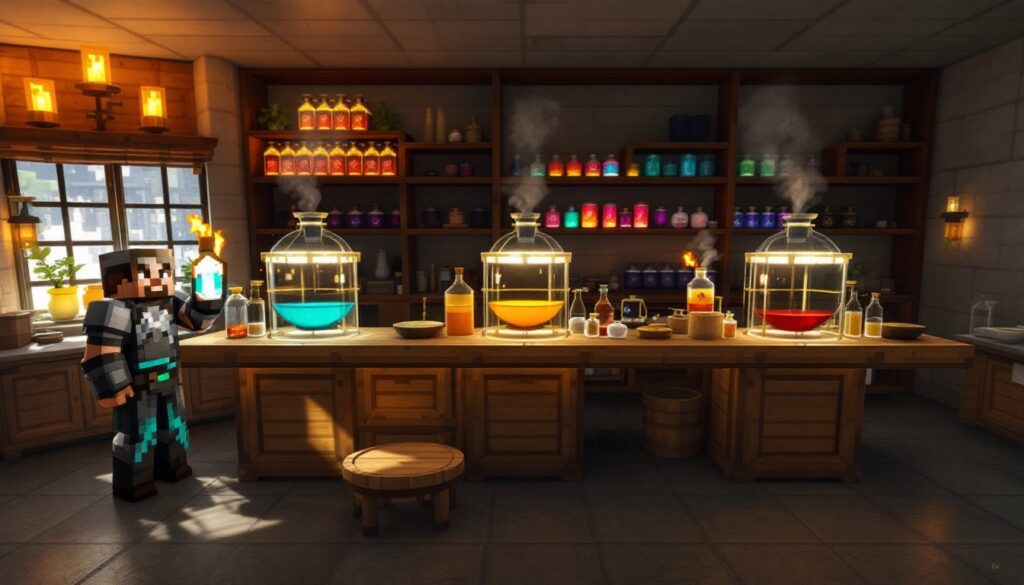
Brewing potions in Minecraft requires a few key items, and getting your setup right saves time and resources. You’ll need a Brewing Stand (craft it with 1 Blaze Rod and 3 Cobblestone), Cauldrons for water storage, and plenty of Glass Bottles to hold your finished potions. Stock up on Nether Wart too, it’s the foundation for nearly every potion you’ll make.
Place your Brewing Stand near water so you can quickly fill bottles. Most players set up a dedicated brewing room with multiple stands running in parallel: this lets you batch-produce potions efficiently. Keep your ingredients organized and visible. A good setup reduces the time between brewing sessions from minutes to seconds.
Fuel comes from Blaze Powder, which you get by smelting Blaze Rods dropped by Blazes in Nether Fortresses. You’ll burn through quite a bit, so farming Blazes is worth the trip. Each Blaze Powder fuels one brewing cycle, and one cycle processes up to three bottles at once. Think of it like loading ammunition, efficient setup means you’re always ready to brew when you need it.
Water Bottles are your base. Fill Glass Bottles with water from your Cauldron or directly from a water source. From there, you add Awkward Potions by tossing in Nether Wart, then layer in secondary ingredients to create specific effects. The brewing bar fills quickly: each step takes about 10-20 seconds depending on lag.
Core Potion Ingredients and Their Effects
Every potion starts with a Water Bottle + Nether Wart, creating an Awkward Potion, your blank canvas. From there, secondary ingredients determine the effect. Understanding what each ingredient does is crucial before you waste resources.
Nether Wart kicks off the alchemy chain. Fire Resistance Potion requires Magma Cream (found in Nether Fortresses or crafted from Slimeballs and Magma Blocks), and it’s essential if you plan to explore lava lakes or fight in the Nether without dying instantly. Speed Potions need Sugar, which you farm from Sugar Cane on water. Strength Potions require Blaze Powder, boosting your melee damage.
Healing Potions use Glistering Melon (crafted from a melon slice and gold nuggets), Night Vision Potions need Golden Carrots, and Invisibility Potions require Fermented Spider Eyes. These are staple brews for specific situations. Water Breathing Potions use Pufferfish (caught from the ocean), letting you breathe underwater without drowning, critical for underwater mining or Ocean Monument runs.
Secondary ingredients can be upgraded with Redstone (extends duration) or Glowstone Dust (amplifies effect). Some players overlook these upgrades, but extending a Strength Potion from 3 minutes to 8 minutes changes entire boss fights. Glowstone amplifies effects but shortens duration, so plan accordingly based on your combat needs.
Crafting Powerful Buff Potions for Combat
When you’re heading into serious combat, fighting the Ender Dragon, Wither, or taking on the toughest Minecraft mobs in a mob grinder, you need stacked buffs. The meta relies on layering multiple potions for maximum effect.
Strength II Potions are non-negotiable for boss fights. Brew Awkward Potion + Blaze Powder to get Strength I, then add Glowstone Dust to upgrade it to Strength II. This doubles your melee damage output, making sword swings genuinely devastating. Pair it with Sharpness V enchanted weapons for exponential DPS increases.
Speed II Potions keep you mobile. Brew with Sugar, then amplify with Glowstone. Moving faster helps you dodge attacks, reposition during fights, and escape danger. Many players skip this, but good positioning often matters more than raw damage.
Resistance Potions (made with Tough Potion + any damage ingredient like Fire Resistance or Weakness) reduce all incoming damage by 20% per level. During Wither fights, Resistance II or III can literally be the difference between one-shotting and survival. These are underrated in casual play but essential for hardcore worlds.
Regeneration Potions heal you passively over time. Brew Awkward Potion + Ghast Tear, then amplify. Unlike Healing Potions that restore health instantly, Regeneration keeps you topped off during prolonged fights. Pro tip: use both, instant heal for burst damage, Regeneration for the grind. A Regeneration Potion in Minecraft deserves its own focus since it’s so versatile across combat and survival scenarios.
Debuff Potions and Strategic Uses
Debuff potions aren’t flashy, but skilled players weaponize them. Harming Potions (made from Awkward Potion + Fermented Spider Eye) instantly damage enemies, useful against undead mobs but less effective on bosses with high health. Weakness Potions reduce melee damage dealt, crushing approaching mobs’ effectiveness. This pairs well with summoning strategy: weaken enemies first, then control the fight.
Poison Potions (crafted similarly to Harming but with different ingredients) damage over time. They’re decent against tanky enemies but don’t work on undead Minecraft mobs like Skeletons or Zombies. Slowness Potions (made with Fermented Spider Eye) cripple enemy movement, essential in PvP or when kiting large groups.
Fatigue Potions disable mining and reduce attack speed, but you rarely brew these since Debuff effects aren’t typically your main weapon. Where debuffs shine is in team fights or when combined with terrain control. Throw a Weakness Potion on approaching enemies, set up a kill zone, and watch them stumble through your defenses. For modded servers running custom content like CurseForge minecraft mod packs, debuff strategies expand significantly since mods introduce new status effects and enemy types.
Advanced Potion Combinations and Tips
Once you’ve mastered basic brewing, optimization unlocks real power. Batch brewing is crucial: set up three Brewing Stands side-by-side and brew Water Bottles into Awkward Potions simultaneously. While those finish, prepare secondary ingredients. This cuts production time dramatically.
Potion stacking is less efficient in vanilla than mods, but knowing which potions synergize matters. Strength + Speed + Regeneration = unstoppable offensive presence. Resistance + Regeneration + Fire Resistance = Nether immunity. Plan your loadout before fights, not during.
Cauldron mechanics matter more in newer versions. You can now store and retrieve potions from cauldrons, making storage easier. This is especially useful on multiplayer servers where shared potion vaults prevent waste.
For players on modded servers, custom brewing systems add depth. Mods expand ingredient pools and introduce effects like Levitation, True Invisibility, or custom stat boosts. Standard Minecraft potion recipes become a foundation you build from.
Ender Pearl farming deserves a mention since Endermen drop them, and many potion-related farms benefit from their drops indirectly. Similarly, running a Blaze farm is mandatory if you’re serious about potions, you’ll need hundreds of Blaze Powder before long.
Pro tip: brew in bulk before major expeditions. Don’t wait until you’re in combat to realize you’re out of Strength Potions. Stack your inventory with a balanced mix: healing for emergencies, buffs for offense, and utility potions like Water Breathing for exploration.
Conclusion
Mastering Minecraft potions transforms gameplay from survival grind to strategic adventure. Whether you’re stocking up before a Dragon fight or preparing for hardcore mode runs, the potion system rewards preparation and knowledge. Set up your brewing station, farm key ingredients, and experiment with combinations until you find your preferred loadout. Potions aren’t just helpful, they’re essential for anyone serious about endgame Minecraft.